
🔬 Myth check
Is Corned Beef and Cabbage Actually Irish?
The St. Patrick's Day dinner most of Ireland never ate. Ireland made famous corned beef for three centuries, then sent nearly all of it overseas.
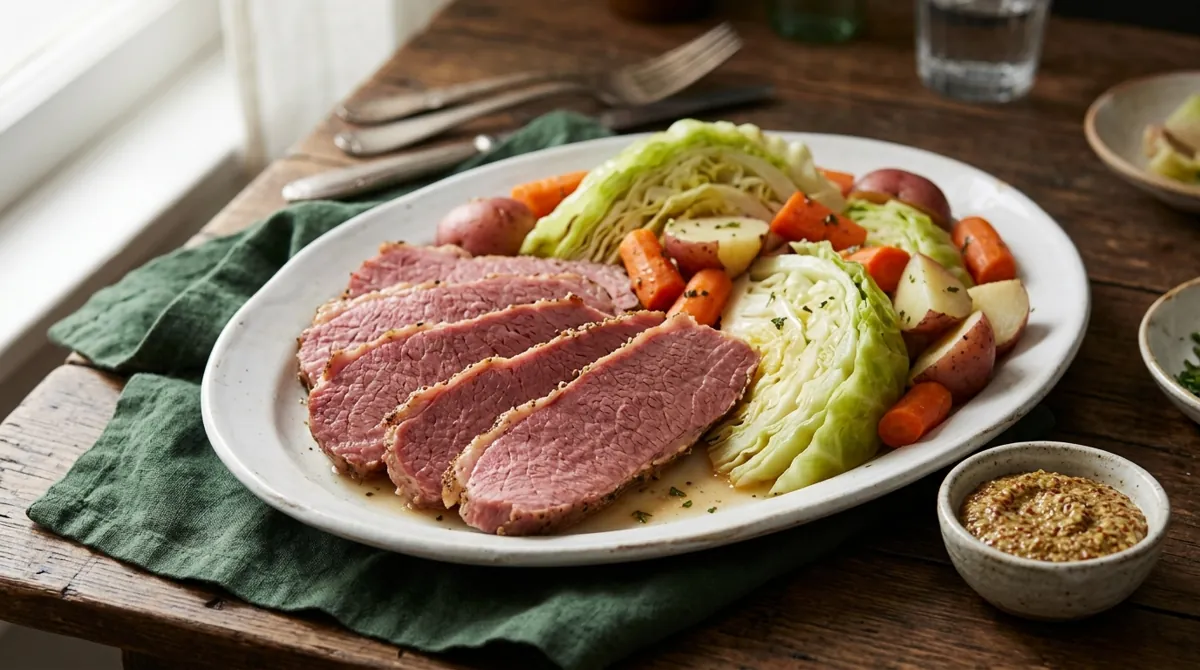
Not really. Corned beef and cabbage is Irish-American. In Ireland the everyday version was bacon and cabbage, while Irish salted beef was mostly an export that fed the British navy and the colonies, and most Irish people rarely ate it. Irish immigrants in New York switched to corned brisket, very likely from Jewish butchers, and made it their St. Patrick's Day dinner.
What Ireland actually ate
The meat on most Irish tables was pork. In The Irish Times, Aoife McElwain explains that a bacon joint boiled with cabbage from the family's garden was the affordable treat, while corned beef was made mainly for export and cost too much for most people.
Our Irish bacon and cabbage with parsley sauce is that dinner: a cured pork joint simmered in a big pot, the cabbage cooked in the salty water, and a white sauce full of parsley.
Beef was not unknown. Smithsonian magazine points to a 12th-century Irish poem that already names corned beef, and a 2011 paper by Máirtín Mac Con Iomaire and Pádraic Óg Gallagher presents evidence that it was eaten as a festive food. So the fair version is that most Irish people rarely ate it, not that they never did.
Ireland's beef sailed away
The export trade was huge. Mac Con Iomaire and Gallagher describe how England's Cattle Acts of 1663 and 1667 shut Irish live cattle out of English markets and pushed Ireland into salting beef instead, with Cork at the center. That salted beef supplied British navy fleets for more than two centuries and went to English and French colonies.
Smithsonian adds that the people who produced it usually could not afford it; if they ate meat at all, it was salted pork or bacon. Cork did keep a beef dish of its own for Christmas. Spiced beef, salt beef rolled in costly imported spices, has been made there for centuries, The Irish Times reports, and our Cork spiced beef follows a Cork butcher's home method.
How brisket became the New York version
After the Famine of the 1840s, about a million Irish emigrated to the United States, many to New York. There, McElwain writes, pork was expensive and beef was cheap, and kosher-cured brisket from Jewish butchers is thought to have become the immigrants' meat of choice. Smithsonian goes further and says they bought almost solely from kosher butchers. The safe reading is very likely from Jewish butchers.
That brisket, salted and simmered until tender, went into a pot with potatoes and cabbage, the cheapest vegetable around, and became the St. Patrick's Day centerpiece. Our corned beef and cabbage is the Irish-American dish, braised low in the oven. Put it next to the Irish original in our bacon and cabbage vs corned beef and cabbage matchup.
Why it is called corned
It has nothing to do with corn. The USDA's Food Safety and Inspection Service explains that before refrigeration, beef was dry-cured with coarse "corns" of salt, some the size of corn kernels. Smithsonian dates the term to 17th-century England. So the name probably comes from the coarse salt grains.
Today brine has replaced the dry salt, USDA says. Most corned beef is cured with nitrite, which fixes the meat's pigment, so cooked corned beef stays pink even when it is done. For the rest of the holiday table, see our St. Patrick's Day recipes.
Questions people ask
Do people in Ireland eat corned beef and cabbage on St. Patrick's Day?
Not traditionally. Smithsonian says the dish never caught on in Ireland, where the customary meal that day was lamb or bacon. Some Irish-American customs have since become easier to find there, largely through tourism.
Why did Irish immigrants switch from bacon to beef?
In New York, pork was relatively expensive and beef was cheap, according to The Irish Times, and Smithsonian notes that immigrants were earning more than they had at home. Brisket from nearby butchers turned tender after salting and long cooking.
What cut is corned beef made from?
USDA lists brisket, rump or round, all less tender cuts that need long, moist cooking. Brisket is the usual choice for the St. Patrick's Day pot and for deli sandwiches.
Parts of this history are disputed. Where sources disagree, we say so.
Sources
- Shaylyn Esposito, "Is Corned Beef Really Irish?", Smithsonian Magazine, March 15, 2013
- Aoife McElwain, "Why did Irish-Americans make corned beef an Irish dish?", The Irish Times
- Máirtín Mac Con Iomaire and Pádraic Óg Gallagher, "Irish Corned Beef: A Culinary History," Journal of Culinary Science and Technology 9(1), 2011 (abstract, TU Dublin ARROW)
- USDA Food Safety and Inspection Service, "Corned Beef and Food Safety" (revised June 2011, GovInfo copy)
- Ali Dunworth, "Old Irish dishes that imbue Christmas dinner with exotic flavours," The Irish Times, December 2023
More food facts
Cook it
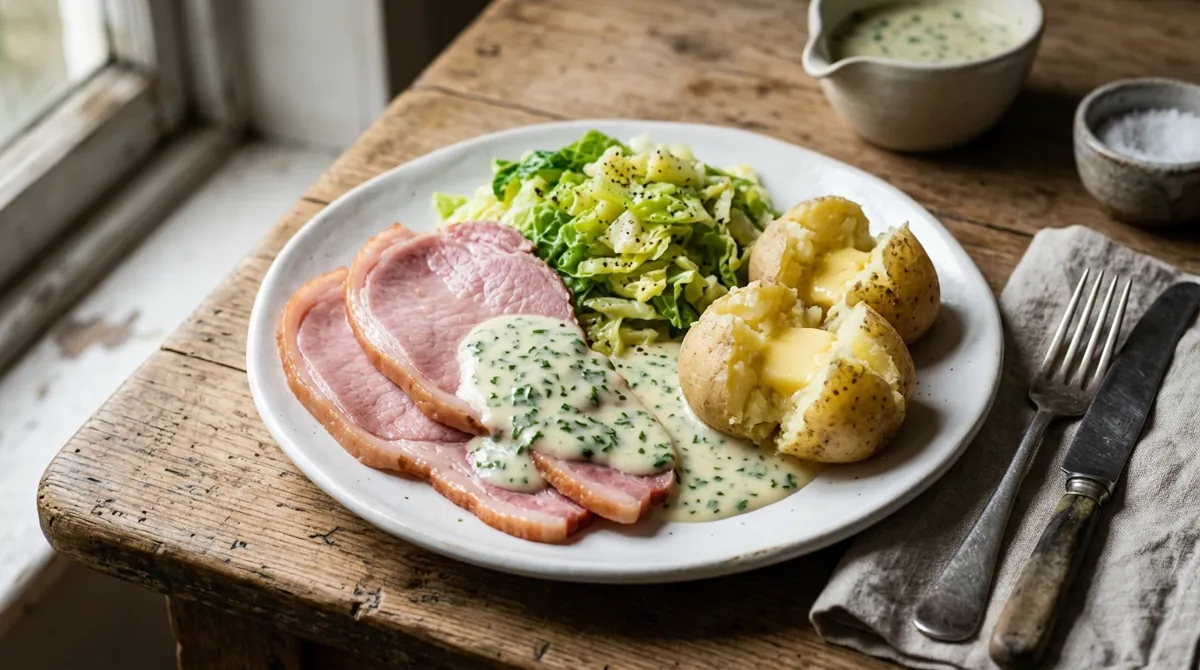
Irish Bacon and Cabbage with Parsley Sauce
The real Irish dinner behind America's corned beef and cabbage: a cured bacon joint simmered in a big pot, cabbage cooked in the salty bacon water, and a white sauce full of parsley.
Corned Beef and Cabbage
The Irish-American St. Patrick's Day dinner: flat-cut corned beef braised low and slow in the oven, then cabbage wedges, carrots and red potatoes simmered in the strained, buttered cooking liquid.
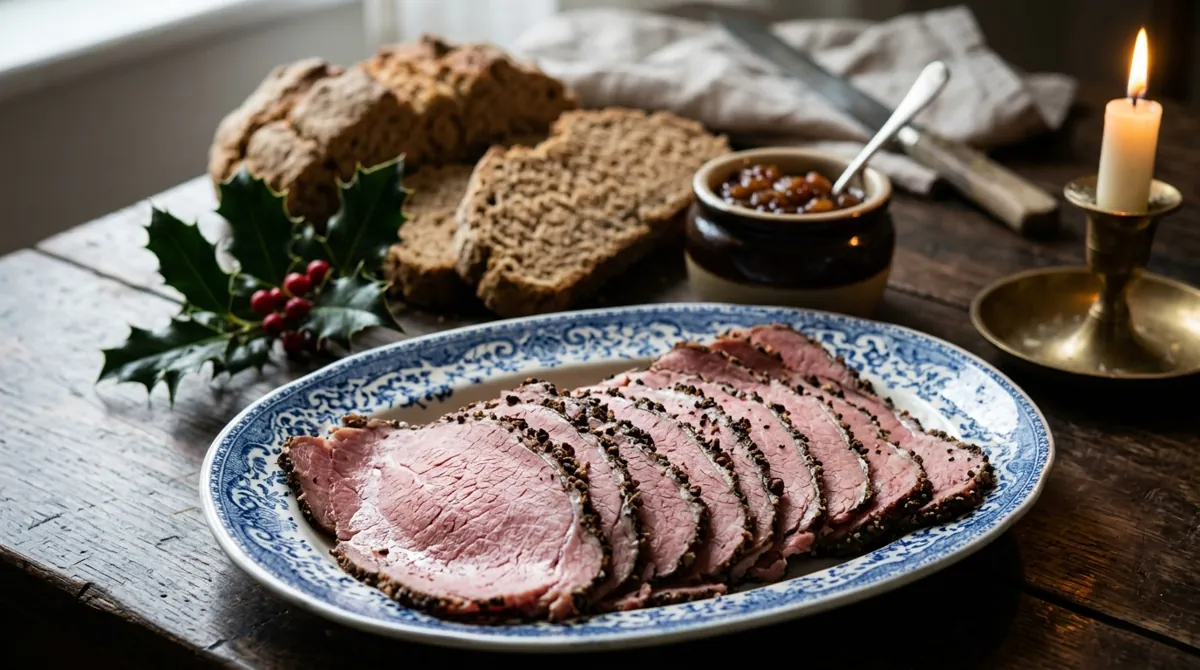
Cork Spiced Beef
Cork's Christmas beef: a corned joint marinated for a week in allspice, brown sugar and three peppers, simmered gently, cooled in its liquid and sliced thin.
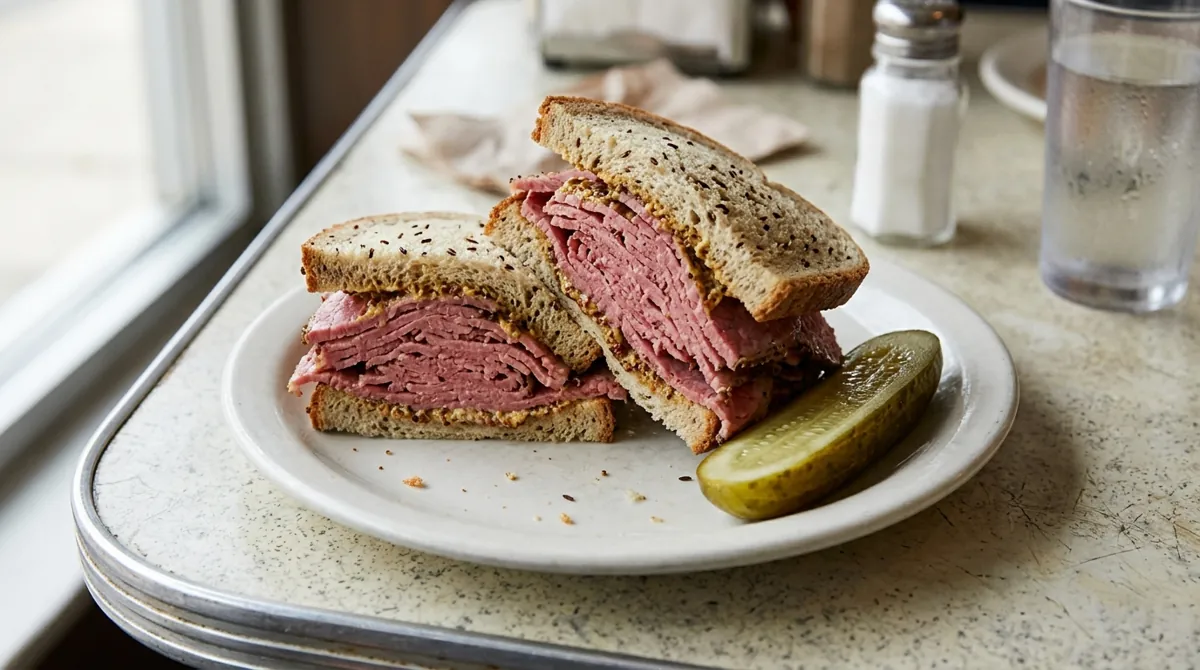
Homemade Deli Corned Beef on Rye
Cure your own brisket for six days in a salt, sugar and pink curing salt brine, simmer it in a low oven, then slice it thin, steam it and pile it on rye with deli mustard.
Diner Corned Beef Hash
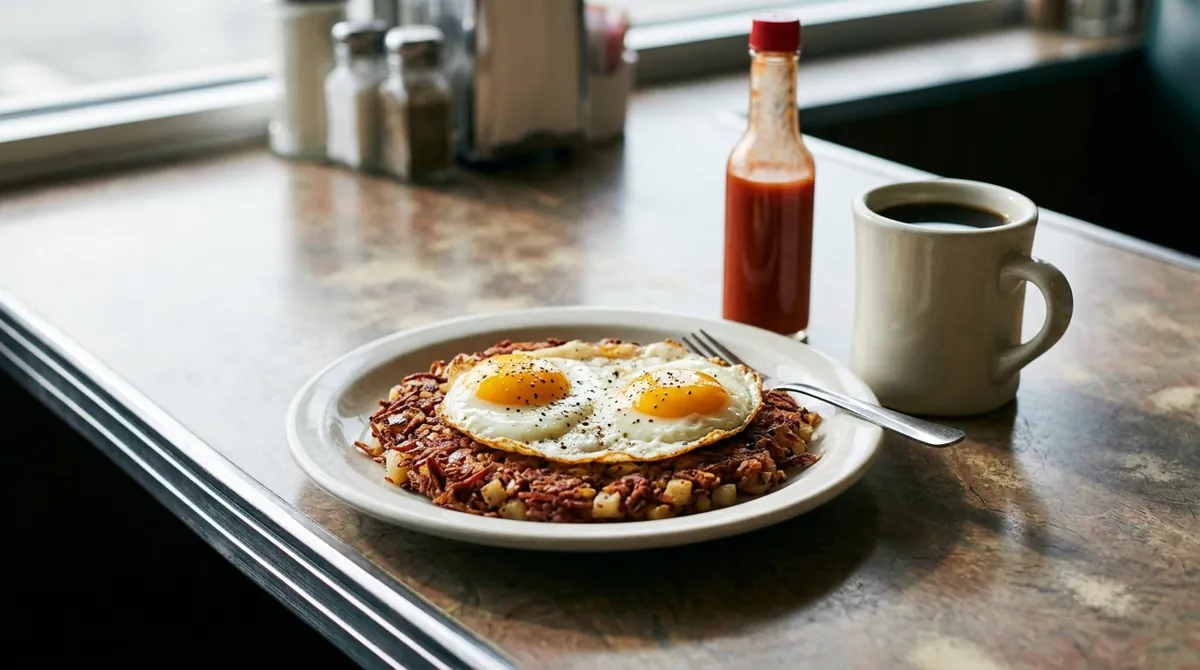
Leftover corned beef and diced potatoes, steamed tender in one skillet, partly mashed so they hold together, then browned hard in butter on both sides and topped with fried eggs.