
📜 Origin story
What Is Chuseok? Korea's Harvest Festival, Explained
A full moon, a trip home, a table for the ancestors and a tray of pine-scented rice cakes. Here is what Korea's biggest autumn holiday is about.
 By Americanized · Edited by JP Lambiase · October 18, 2026
Chuseok is Korea's autumn harvest festival, held on the 15th day of the eighth lunar month under the year's biggest full moon. In South Korea it is a three-day holiday. Families travel home, honor their ancestors with food from the new harvest, visit family graves and make songpyeon, small rice cakes steamed on pine needles. It is often called Korean Thanksgiving because it is a family feast that gives thanks for the harvest.
When it falls
Chuseok follows the lunar calendar, so its date moves every year. The Korea Tourism Organization's VisitKorea site explains that it lands on the 15th day of the eighth lunar month, the night of the harvest moon, and that the days before and after are holidays too.
In 2025 Chuseok fell on October 6, with a holiday stretch from October 5 to 8 once the weekend was added. In 2026 it fell on Friday, September 25, with legal holidays from September 24 to 26, according to Korea.net. Its other name, hangawi, combines han, meaning big, with gawi, the middle of the eighth lunar month, VisitKorea says.
Ancestors first
On Chuseok morning, families gather at the head family's house for charye, a memorial service for their ancestors. VisitKorea lists the offerings as newly harvested rice, alcohol and songpyeon, and afterward the family eats the food together.
Seongmyo is the visit to the ancestral graves, where families clear away weeds and hold a simple memorial. The Korea Herald notes that many families still keep both customs, though plenty now take a family trip instead.
Songpyeon and the rest of the table
Songpyeon is the dish everyone associates with Chuseok. VisitKorea describes rice dough shaped into pieces a little smaller than a golf ball and filled with sesame seeds, beans, red beans or chestnuts. The cakes are steamed on layers of pine needles, which give them a pine scent, and families traditionally make them together the night before. An old belief, Korea.net reports, says whoever shapes beautiful songpyeon will find a good spouse or have a beautiful baby.
The rest of the holiday spread, per VisitKorea, includes galbijjim (braised short ribs in a sweet soy sauce), jeon (fish, meat or vegetables dipped in flour and egg and pan-fried), hangwa (traditional sweets made with honey and rice syrup) and sikhye, a sweet rice punch. Jeon is a big family of pancakes; our potato gamja-jeon is one everyday member of it.
How old is it?
Nobody is sure. The Korea Herald says Chuseok's origins are unclear, though the holiday appears as far back as the records of the Silla kingdom (57 B.C. to A.D. 935). Similar full-moon holidays fall on the same lunar date across East Asia, including China's Mid-Autumn Festival.
The modern holiday is newer. South Korea first made Chuseok a public holiday in 1949 and has given it three days since 1989, the Herald reports.
Why "Korean Thanksgiving"?
VisitKorea itself calls Chuseok Korean Thanksgiving Day, and the comparison makes sense: an autumn harvest, a long trip home and a big family meal. The differences are bigger, though. Chuseok follows the moon, centers on the ancestors and has no turkey; rice cakes, short ribs and pancakes fill the table instead.
If you want something Korean on your own table, try our kimchi mandu or the ginseng chicken soup samgyetang. Neither is a Chuseok ritual dish, but both are Korean home cooking. Browse more in our dumplings hub.
Questions people ask
What is songpyeon made of?
Rice dough wrapped around a filling such as sesame seeds, beans, red beans or chestnuts, then steamed on a bed of pine needles. Korea's tourism organization says families traditionally make them together the night before Chuseok.
Is Chuseok the same as the Mid-Autumn Festival?
They share a date, the 15th day of the eighth lunar month, but they are separate holidays. The Korea Herald notes that China's version centers on mooncakes, while Korea's centers on ancestral rites and songpyeon.
Does North Korea celebrate Chuseok?
Yes, but differently. The Korea Herald reports that North Korea banned it from 1967 to 1971, has recognized it again since 1988, and gives only one day off.
Parts of this history are disputed. Where sources disagree, we say so.
Sources
- Korea Tourism Organization (VisitKorea), "Traditional Korean Holiday of Bountiful Harvest, Chuseok"
- Manuel Guthmann, Korea.net Honorary Reporter, "Chuseok 2026: So feiert Korea eines seiner wichtigsten Feste" (German edition of the Korean government's Korea.net)
- Semra Karaisufova, Korea.net Honorary Reporter, "A quick guide to Chuseok," September 11, 2019
- Lim Jae-seong, The Korea Herald, "Same day, different holiday: Mid-autumn festivals across East Asia," September 26, 2023
More food facts
Cook it
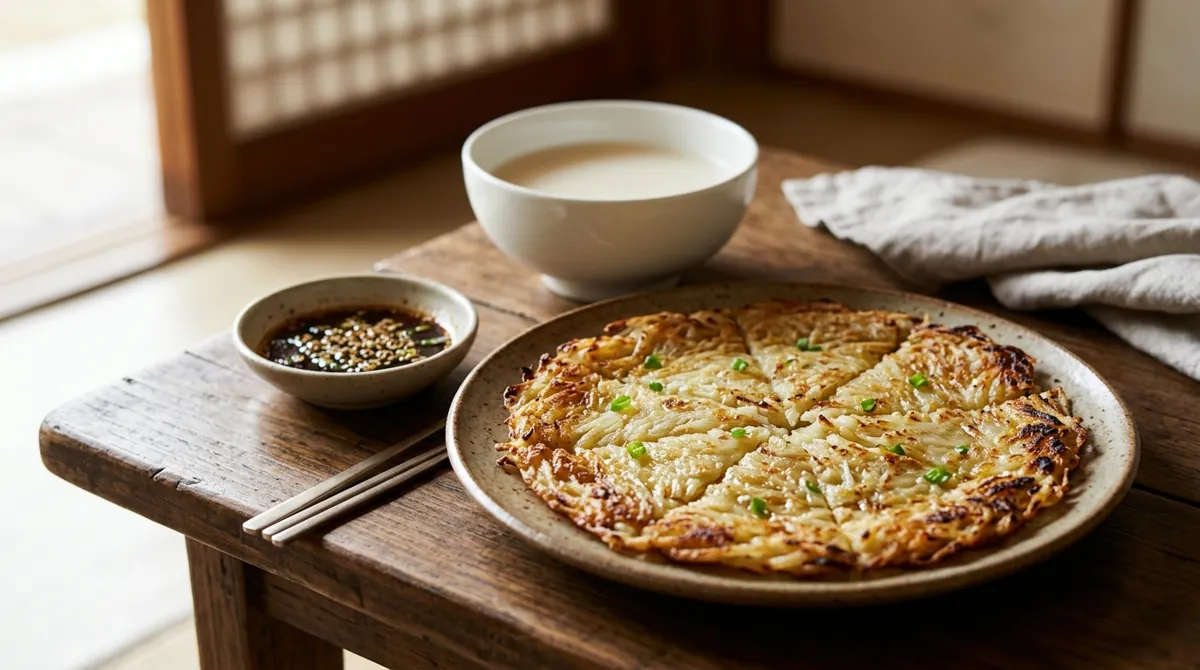
Korean Gamja-jeon (Potato Pancakes)
Grated potato bound only by its own settled starch, with a little onion and garlic chives, pan-fried into crisp, chewy Korean pancakes with a soy and vinegar dipping sauce.
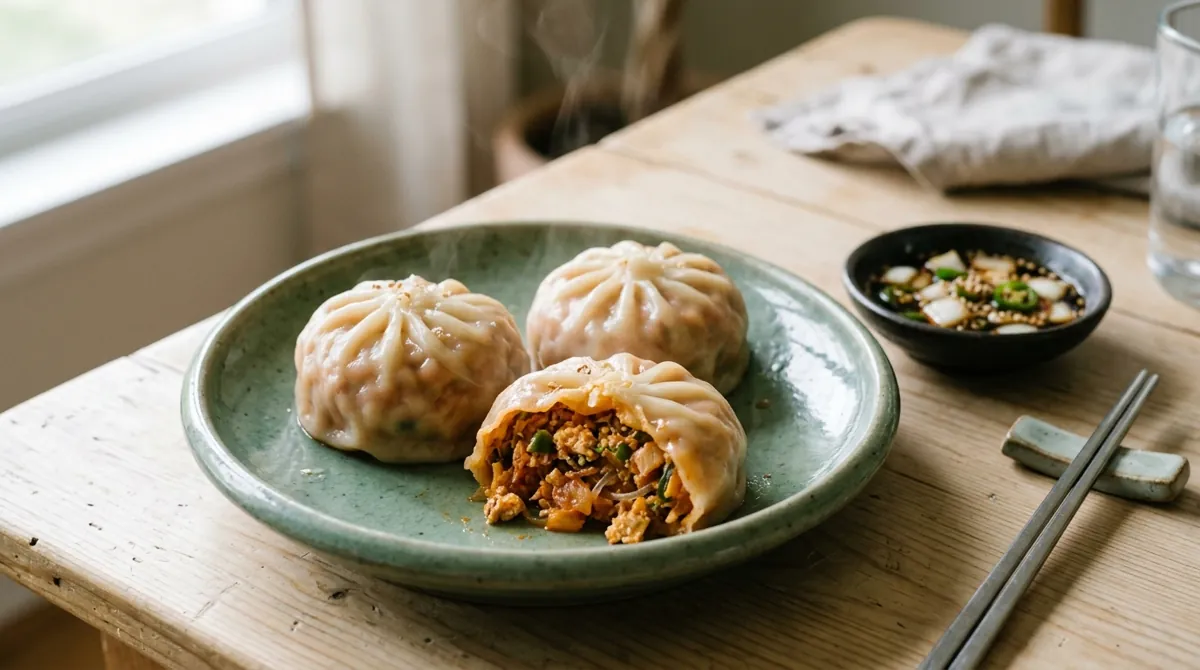
Kimchi Mandu (Korean King-Size Kimchi Dumplings)
Big homemade wrappers pleated around a juicy filling of seasoned ground beef, chopped kimchi, tofu, sweet potato glass noodles and garlic chives, steamed and served with a sharp soy, vinegar and chile dipping sauce.
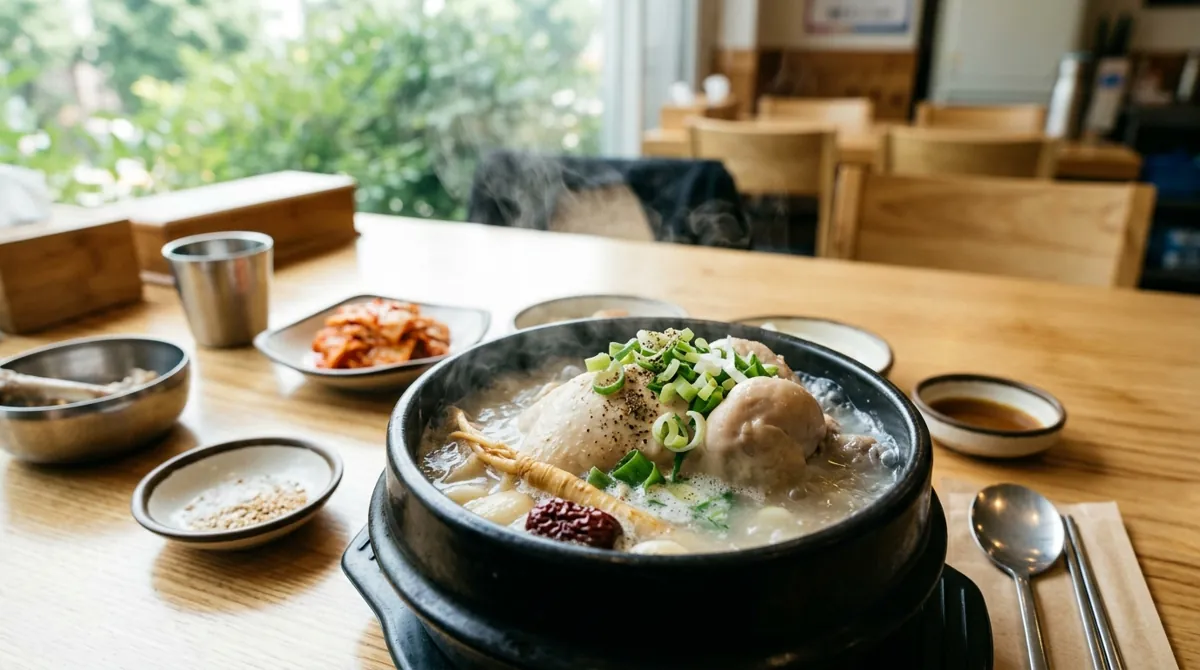
Samgyetang (Korean Ginseng Chicken Soup)
Two Cornish hens stuffed with soaked short-grain rice, fresh ginseng, a jujube and eight garlic cloves each, simmered whole for over an hour until the rice is soft and the broth milky, served one hen per bowl with green onion, black pepper, kimchi and two dipping sauces.
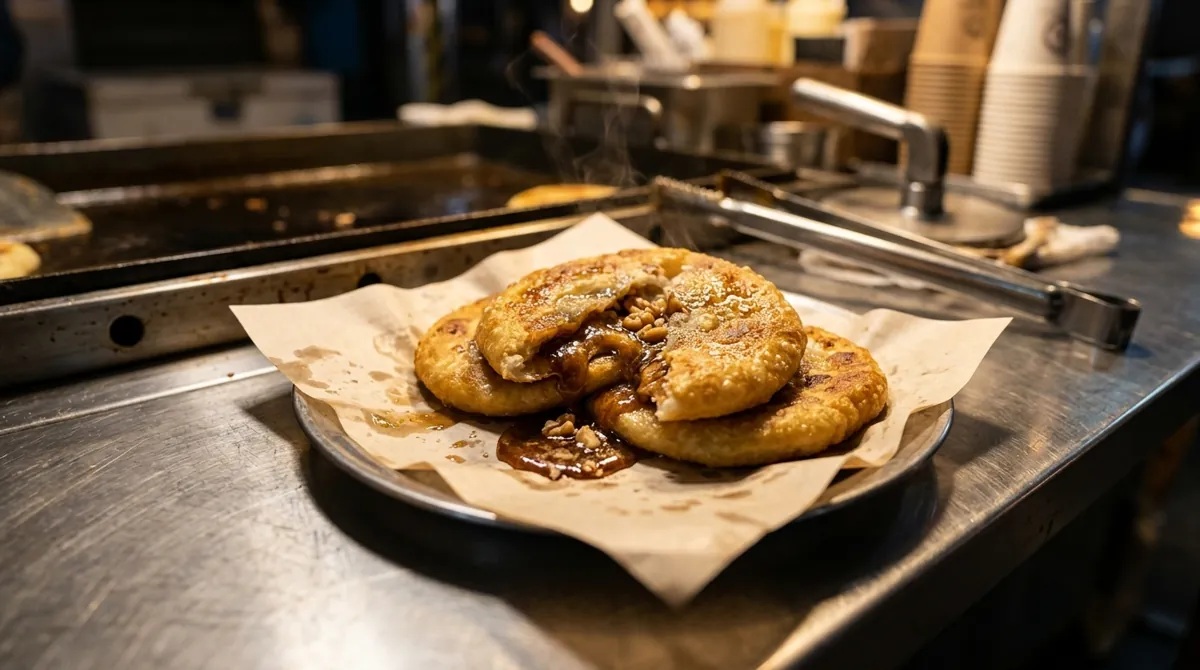
Korean Hotteok (Sweet Filled Pancakes)
A chewy yeasted dough made with sweet rice flour, wrapped around brown sugar, cinnamon and walnuts and pressed flat in an oiled pan until the filling melts into syrup.
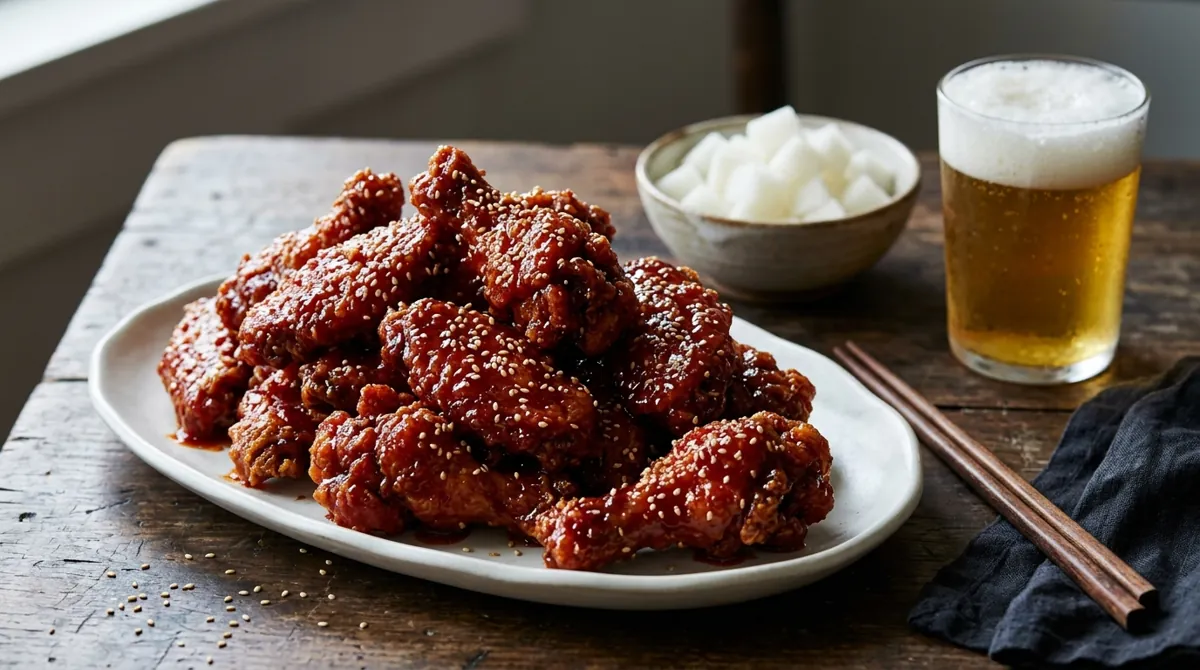
Korean Yangnyeom Chicken (Double-Fried Sweet and Spicy Wings)
Chicken wings in a light potato starch and egg batter, fried twice for a shatter-crisp crust, then tossed in a glossy sauce of gochujang, ketchup, syrup and garlic and showered with sesame seeds.