
📜 Origin story
Why Do Doughnuts Have Holes? The Sea Captain Story, Checked
The famous answer is a teenage sailor with a pepper box lid. The likelier answer is plain kitchen physics, and plenty of the world's doughnuts never had a hole at all.
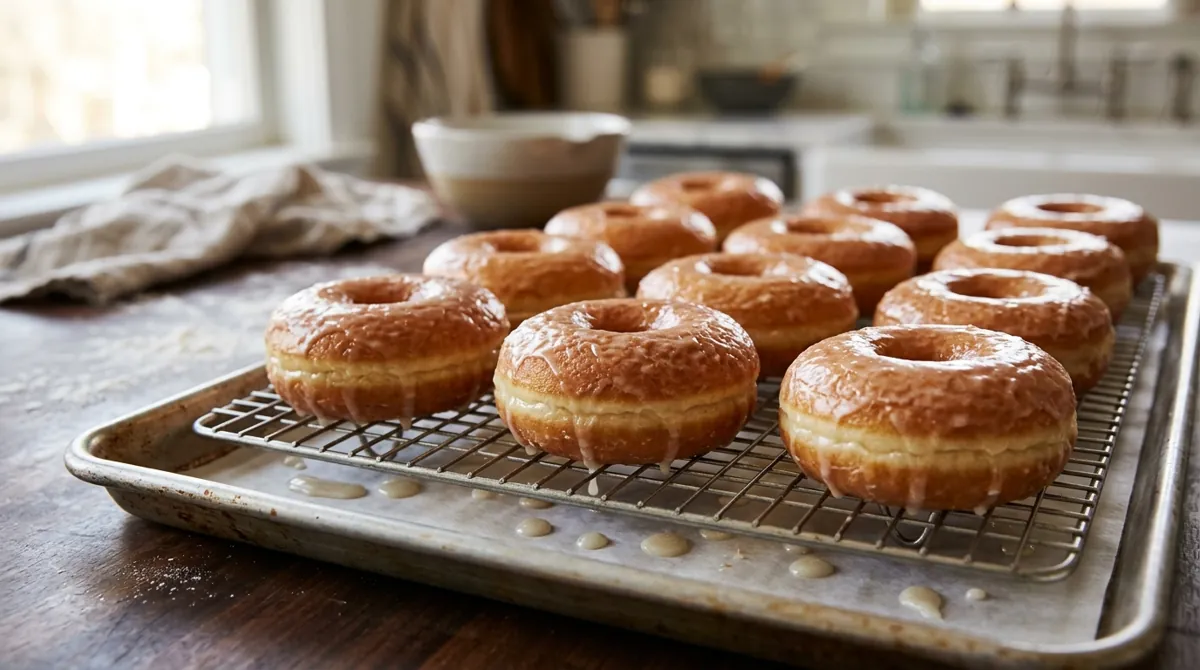
Mostly so they cook through evenly. A thick, sweet disk of dough can brown outside before the middle is done; take out the center and the hot oil reaches every part. The usual credit goes to Hanson Gregory, a Maine sailor who said he cut the first hole in 1847, but that is his own story, told decades later, and historians doubt it.
The sea captain's story
On March 26, 1916, The Washington Post ran an interview with Hanson Gregory, an old Maine sailor then living at Sailors' Snug Harbor in Quincy, Massachusetts. He said that as a teenager at sea in 1847, doughnuts were cut into diamonds and twisted strips that fried fine at the edges but stayed raw dough inside.
His fix, he said, was to take the lid off the ship's tin pepper box and punch out the middle, cutting "the first hole ever seen by mortal eyes." The story stuck. In November 1947 his friends dedicated a bronze tablet at his birthplace in Rockport, Maine, crediting him with inventing the hole in 1847, and both The New York Times and The Washington Post covered the ceremony.
Why historians doubt it
The only witness is Gregory himself. The word researcher Barry Popik searched historical newspaper databases and found nothing tying Gregory to the doughnut before that 1916 interview, about 70 years after the day in question. His own telling also shifted over the years, and popular retellings have added more color since.
Food historians also note that he was not the first person to fry dough with a hole in it. Michael Krondl, author of The Donut, has pointed out that holed fried pastries are far older, going back a very long way in North Africa, and that recipes for holed, doughnut-like pastries predate Gregory's account. He also admits he cannot prove exactly where the American ring came from. Neither can anyone else, which is why the hole's origin is still called disputed.
The practical reason: an even fry
The likeliest explanation is the same problem Gregory complained about. Krondl's account goes like this: in the 19th century American cooks moved from slow yeast doughs to quick chemical leaveners, and they made the dough sweeter. Sugar browns fast, so a thick sweet doughnut can burn outside before the center cooks. Knock out the middle and every part sits close to the oil.
The culinary historian Linda Civitello makes the same point in her book Cuisine and Culture: the hole lets doughnuts cook faster. By 1870, Eater's Daniela Galarza reports, cutters with two concentric circles were selling in home catalogs. Our classic glazed doughnuts still work that way, with a 3-inch cutter for the ring and a 1-inch cutter for the center, and the rings fry in 1 to 1 1/2 minutes a side. The cut-out centers fry together as doughnut holes.
Other theories, and doughnuts that never had a hole
Krondl has also suggested, in Eater's account, that the ring may come from recipes telling cooks to shape the dough like a jumble, a once common ring-shaped cookie. That is a guess about influence, not a documented origin.
The doughnut's Dutch ancestor had no hole at all. In 1809 Washington Irving described Dutch tables in old New York loaded with balls of sweetened dough fried in hog's fat and called doughnuts or olykoeks. Lydia Maria Child's 1832 American Frugal Housewife gives a dough-nut recipe raised with pearlash and says nothing about shape. The Dutch still fry balls: our oliebollen are scooped and dropped, no cutter needed. You can see both shapes, ring and ball, side by side in our doughnuts hub, and the two American rings face off in glazed vs old-fashioned.
Questions people ask
Who invented the doughnut hole?
Nobody knows for sure. Hanson Gregory claimed he cut the first one at sea in 1847, and a 1947 plaque in Rockport, Maine, honors him, but his account was first published in 1916 and food historians point to holed fried doughs that are much older.
Did the first doughnuts have holes?
No. The Dutch olykoeks Washington Irving described in 1809 were balls of sweetened dough, and early American recipes such as Lydia Maria Child's 1832 dough-nuts give no ring shape. The two-circle cutter shows up in catalogs by 1870.
Are doughnut holes really the middles of doughnuts?
Often, yes. Cutting rings leaves small rounds of dough, and frying them is the thrifty way to use them. In our glazed doughnut recipe the 12 centers fry together in about 2 minutes, while each ring takes 2 to 3.
Parts of this history are disputed. Where sources disagree, we say so.
Sources
- Barry Popik, "'Doughnut Hole' and Hanson Gregory (1916)," ADS-L mailing list, May 12, 2003
- Kathy Padden, "This Day in History: June 22nd, Captain Gregory and the Invention of the Doughnut," Today I Found Out, June 22, 2015
- New England Historical Society, "Maine Ship Captain Invented the Modern Donut"
- Lesley Kennedy, "Who Invented Doughnuts?," HISTORY
- Gastropod (Cynthia Graber and Nicola Twilley), "Raised and Glazed" episode transcript
- Daniela Galarza, "Everything You Need to Know About the Great American Doughnut," Eater, May 28, 2015
- Washington Irving, Knickerbocker's History of New York (Project Gutenberg eBook 13042)
- Lydia Maria Child, The American Frugal Housewife, 1832 (Project Gutenberg eBook 13493)
More food facts
Cook it
Classic Yeast-Raised Glazed Doughnuts
Tall, airy ring doughnuts from a buttery dough that rests overnight in the fridge, proofed in a steamy oven, fried golden and dipped in a sheer vanilla glaze that sets matte and crackly.
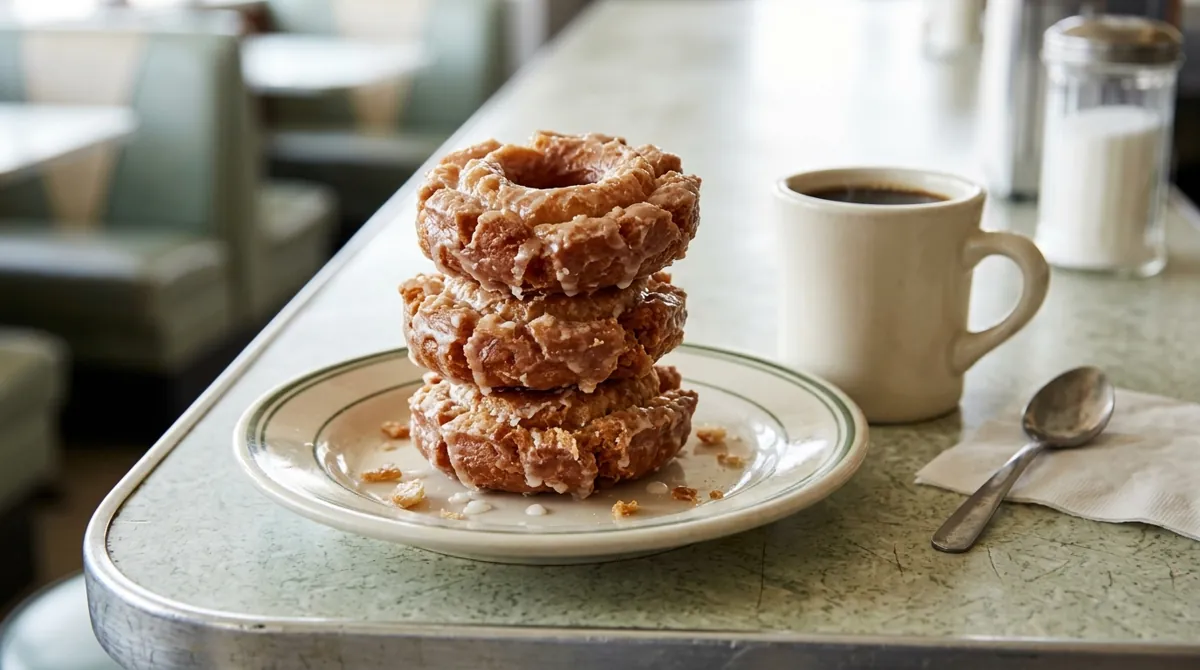
Old-Fashioned Sour Cream Doughnuts
Tangy sour cream and buttermilk cake doughnuts, chilled, cut and fried until craggy and crisp at the edges, then dipped in a thin vanilla glaze that settles into every crack.
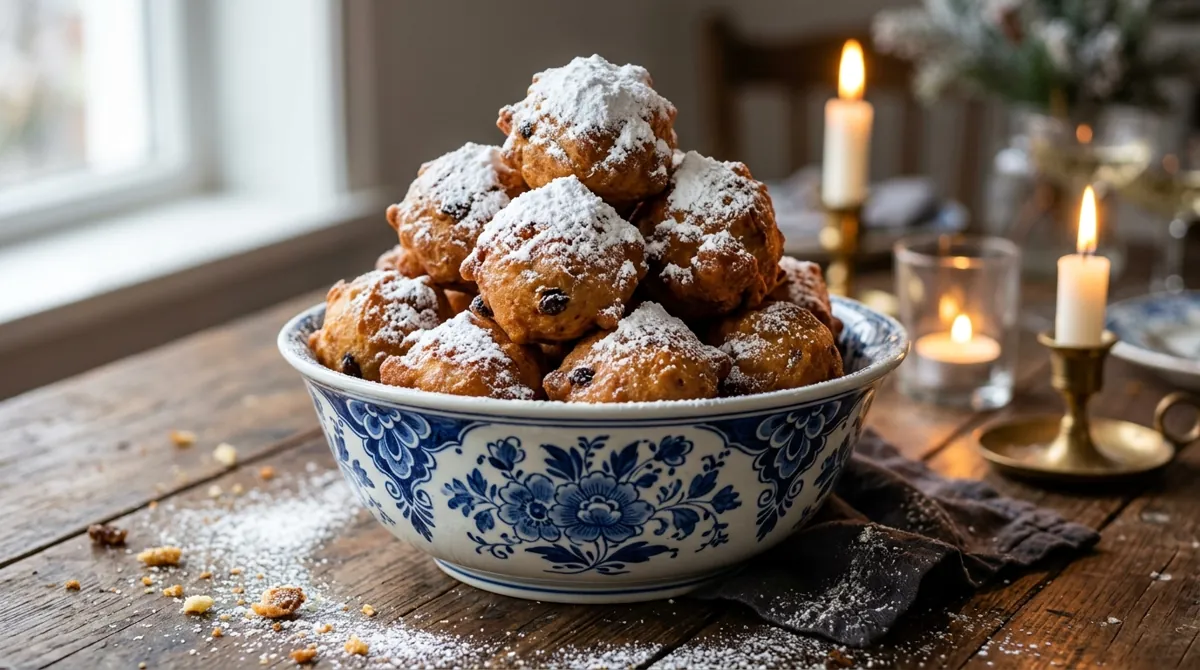
Dutch Oliebollen (New Year's Eve Doughnuts)
Scoops of soft yeast batter studded with raisins and currants, fried round and golden and buried in powdered sugar, the Dutch New Year's Eve treat and a cousin of the olykoeks the Dutch made in old New York.
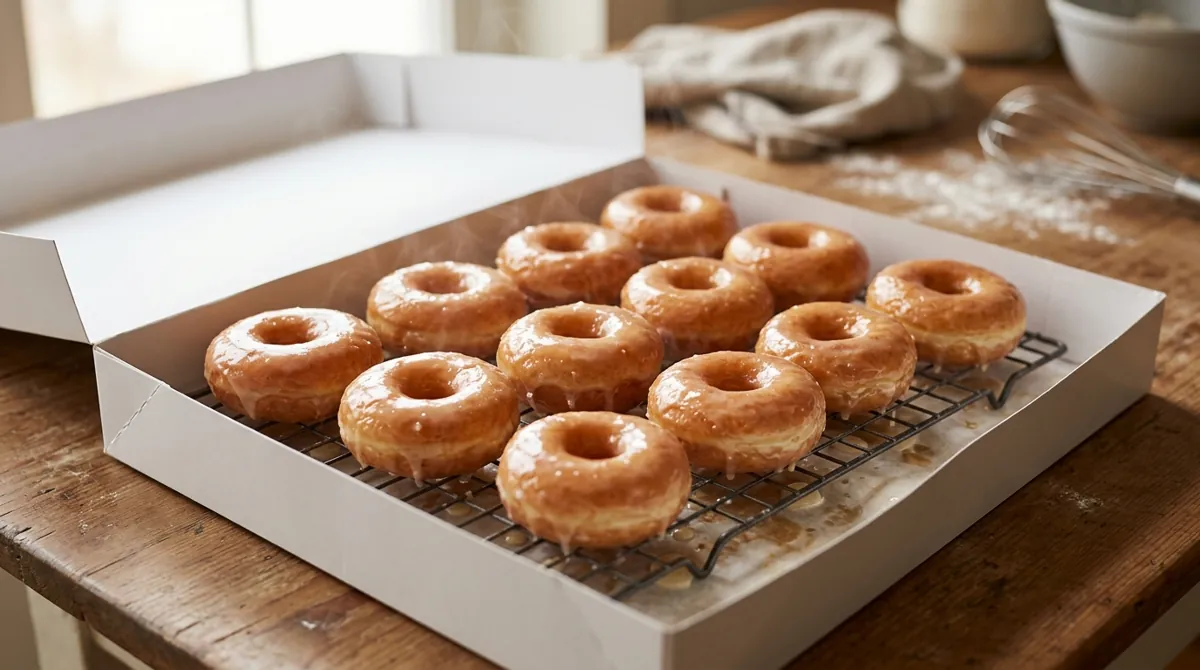
Hot Glazed Doughnuts, Inspired by Krispy Kreme
Light, fluffy yeast rings made with shortening, fried in shortening and dipped while warm in a thin, warm glaze of powdered sugar, milk and corn syrup, a home take on the famous hot glazed doughnut. Inspired by, not official.
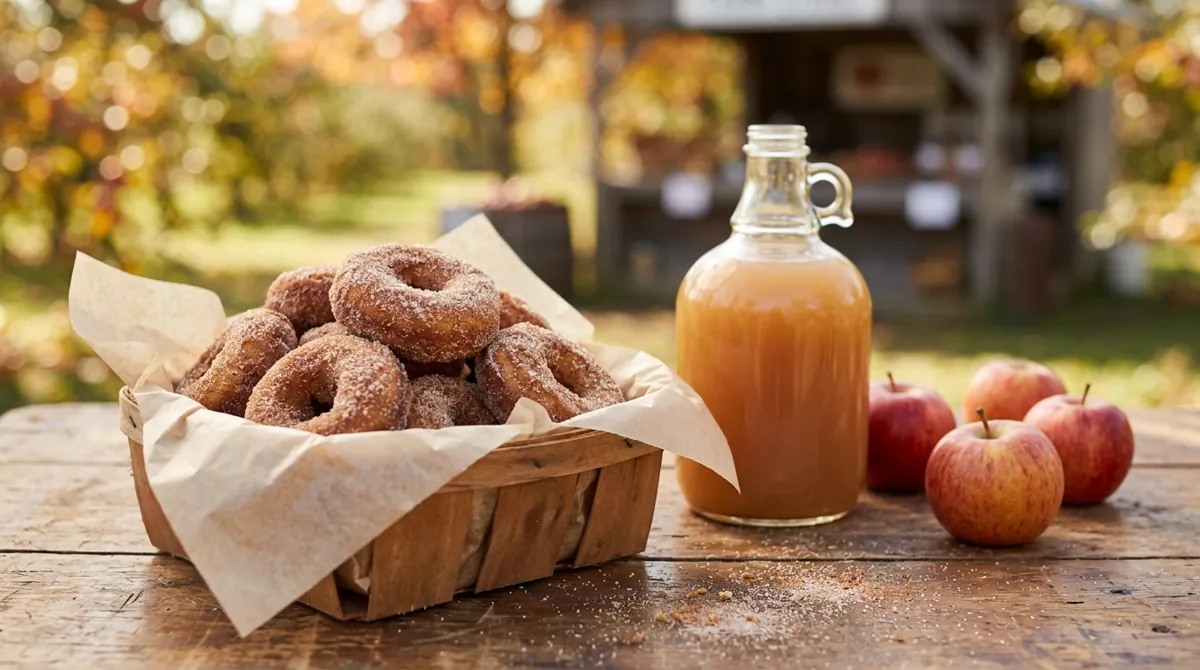
Apple Cider Doughnuts
Tender cake doughnuts flavored with apple, buttermilk, cinnamon and nutmeg, fried in two minutes and tossed in cinnamon sugar, the fall orchard and cider-mill classic made at home.