
Kaiserschmarrn (Austrian Torn Pancake)
A thick, fluffy pancake lifted with whipped egg whites and rum-soaked raisins, browned in butter, finished in the oven, then torn apart with two forks, caramelized with sugar and served with plum compote.
🍳Cook alongOne move at a time, with real timers
 Edited by JP Lambiase
Change the estimate
Swaps change the price only: cook any meat to its own safe temperature. Where these numbers come from
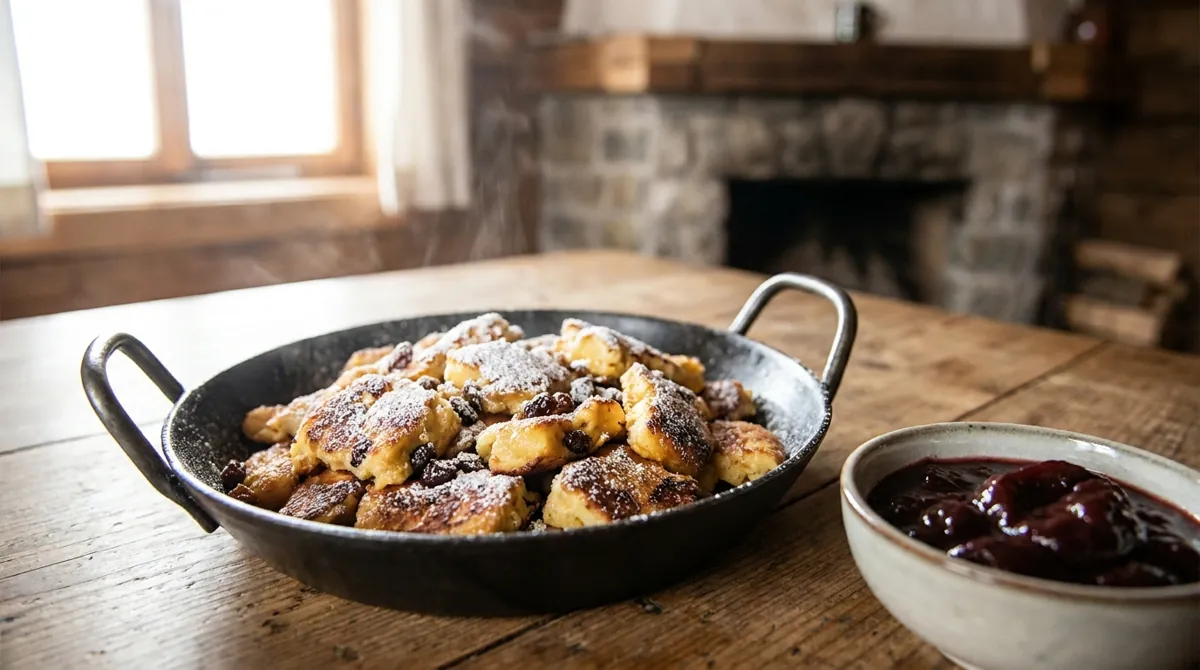
Kaiserschmarrn is a light, caramelized pancake from a sweet batter, shredded with two forks while it cooks, dusted with powdered sugar and eaten as dessert or a light lunch, especially at mountain restaurants in the Austrian Alps; it is traditionally served with Zwetschgenröster, a plum compote (Wikipedia:). "Kaiser" means emperor, and "Schmarrn" is Austrian and Bavarian slang for a mishmash, a mess or nonsense, so the name translates as "Emperor's Mess". Austria's national tourism site says Emperor Franz Joseph stayed loyal to simple home cooking and loved egg, flour and milk dishes such as Kaiserschmarren, and that rumor has it the dish began as an omelette shredded by mistake (austria.info, Renate Wagner:).
How it began is a pile of legends. Wikipedia's "generally agreed" line that it was first made for Franz Joseph I (1830 to 1916) is flagged "citation needed", and it calls the story of Empress Elisabeth refusing a rich dessert apocryphal. The Leo Baeck Institute's archivist Michael Simonson collects three: the empress story, the emperor being served a woodcutter's Schmarrn while hunting in the Salzkammergut, and botched Palatschinken handed to the staff. An American pancake is poured into neat rounds; Austria's most famous one is torn apart on purpose.
Why it works the kitchen science
Separated eggs
The whites are whipped and folded in last, so six eggs puff a thick batter into a soufflé-like pancake that stays light even after it is torn.
Torn, then caramelized
Tearing it into pieces makes dozens of new edges, and the butter and sugar turn each one crisp and sweet under the broiler.
🧰 You'll need 9 items
Everything the steps call for. Tick off what you have before you start.
Appliances
Pans and pots
Tools
Step by step
- Step 1
Make the compote: simmer the plums, sugar, cinnamon and water in a small saucepan over medium-low heat 12 to 15 minutes, stirring now and then, until the plums are soft and saucy. Set aside. Soak the raisins in the rum for 15 minutes.
- Step 2
Whisk the egg yolks, milk, flour, vanilla sugar and lemon zest in a large bowl into a smooth batter. Heat the oven to 350°F.
- Step 3
Beat the egg whites with the pinch of salt until foamy, then add the 3 tbsp sugar a little at a time and beat to firm, glossy peaks. Fold them gently into the batter.
- Step 4
Melt the 50 g butter in a 12-inch ovenproof skillet over medium heat until it bubbles. Pour in the batter. After 1 to 2 minutes, scatter the raisins over the top.
- Step 5
Cook 3 to 4 minutes more, until the underside is light brown. Cut it into quarters with a spatula and turn each quarter over.
- Step 6
Bake 6 to 8 minutes, until golden and puffed. The thickest part should read 160°F; if it doesn't, bake 1 to 2 minutes more.
- Step 7
Tear the pancake into bite-size pieces with two forks, right in the pan. Scatter the butter pieces and 1 tbsp sugar over the top and caramelize 1 to 2 minutes under a hot broiler, watching closely, or stir it over medium heat on the stove.
- Step 8
Dust with powdered sugar and cinnamon and serve on warm plates with the plum compote.
Kaiserschmarrn (Austrian Torn Pancake)
Serves 4 · 1 large pancake, torn into pieces · 55 min total
Batter
- 2 tbsp raisins
- 1 tbsp dark rum
- 6 large eggs, separated
- 1 1/2 cups (350 ml) whole milk
- 1 1/3 cups (200 g) all-purpose flour
- 2 tsp sugar plus 1 tsp vanilla extract (for 1 sachet vanilla sugar)
- Grated zest of 1/2 lemon
- Pinch of salt
- 3 tbsp sugar, for the whites
For the pan
- 3 1/2 tbsp (50 g) butter
- 1 tbsp butter, cut into small pieces, and 1 tbsp sugar, for caramelizing
Quick plum compote
- 1 lb (454 g) plums, pitted and quartered
- 1/4 cup (50 g) sugar
- 1/2 tsp ground cinnamon
- 2 tbsp water
To serve
- 2 tbsp powdered sugar
- Pinch of ground cinnamon
Equipment: Oven, Small saucepan, Skillet, Instant-read thermometer, Chef's knife and cutting board, Measuring cups and spoons, Mixing bowls, Whisk, Spatula
Method
- Make the compote: simmer the plums, sugar, cinnamon and water in a small saucepan over medium-low heat 12 to 15 minutes, stirring now and then, until the plums are soft and saucy. Set aside. Soak the raisins in the rum for 15 minutes.
- Whisk the egg yolks, milk, flour, vanilla sugar and lemon zest in a large bowl into a smooth batter. Heat the oven to 350°F.
- Beat the egg whites with the pinch of salt until foamy, then add the 3 tbsp sugar a little at a time and beat to firm, glossy peaks. Fold them gently into the batter.
- Melt the 50 g butter in a 12-inch ovenproof skillet over medium heat until it bubbles. Pour in the batter. After 1 to 2 minutes, scatter the raisins over the top.
- Cook 3 to 4 minutes more, until the underside is light brown. Cut it into quarters with a spatula and turn each quarter over.
- Bake 6 to 8 minutes, until golden and puffed. The thickest part should read 160°F; if it doesn't, bake 1 to 2 minutes more.
- Tear the pancake into bite-size pieces with two forks, right in the pan. Scatter the butter pieces and 1 tbsp sugar over the top and caramelize 1 to 2 minutes under a hot broiler, watching closely, or stir it over medium heat on the stove.
- Dust with powdered sugar and cinnamon and serve on warm plates with the plum compote.
Adapted from Renate Wagner, "Kaiserschmarren", austria.info (Austria Tourism; no date shown), as written for 4. Batter (6 eggs, 200 g flour, 350 ml milk, vanilla sugar, lemon zest, a pinch of salt), the rum-soaked raisins, about 50 g butter for frying, the 180°C (356°F) oven for 6 to 8 minutes, tearing with two forks and caramelizing with butter and sugar are Austria Tourism's. Its ingredient list and its steps disagree on which sugar goes where; we beat 3 tbsp sugar into the whites and caramelize with 1 tbsp butter and 1 tbsp sugar. We use 1 tsp vanilla extract and 2 tsp sugar for the sachet of vanilla sugar, 1 tbsp rum for "a dash", a 12-inch skillet, 350°F, and the 3 to 4 minute first side. Flipping in quarters is from the Leo Baeck Institute recipe. The 160°F check is ours (FoodSafety.gov, egg dishes). The quick plum compote is ours; Wikipedia names plum compote as the traditional side. austria.info. Ingredient list follows the source; the method is in our own words.
All sources (3)
Tips
- No rum? Soak the raisins in warm water or apple juice, or leave them out; Wikipedia says the original has only rum-soaked raisins and fruit and nuts came later.
- Austria Tourism's shortcut: skip the oven and finish it on the stove, caramelizing at the end with the lid on.
- Applesauce or any berry compote works in place of the plums (Wikipedia, austria.info).
The rules people argue about
What the sources agree on, what they don't, and what is just a good story.
- It was invented for Emperor Franz Joseph. Disputed: Wikipedia's "generally agreed" line is flagged "citation needed", and every origin story we found is called a legend, apocryphal or a rumor.
- Empress Elisabeth refused it and the emperor ate both servings. Folklore: Wikipedia calls it apocryphal.
- It began as a woodcutter's pancake in the Salzkammergut. Folklore: a legend from German Wikipedia, via the Leo Baeck Institute.
- It began as a shredded omelette. Folklore: austria.info says "rumour has it".
- Raisins are traditional. Documented: Wikipedia says the original recipe only includes rum-soaked raisins.
- Serve it with plum compote. Documented (Wikipedia: Zwetschgenröster).
Serve it with
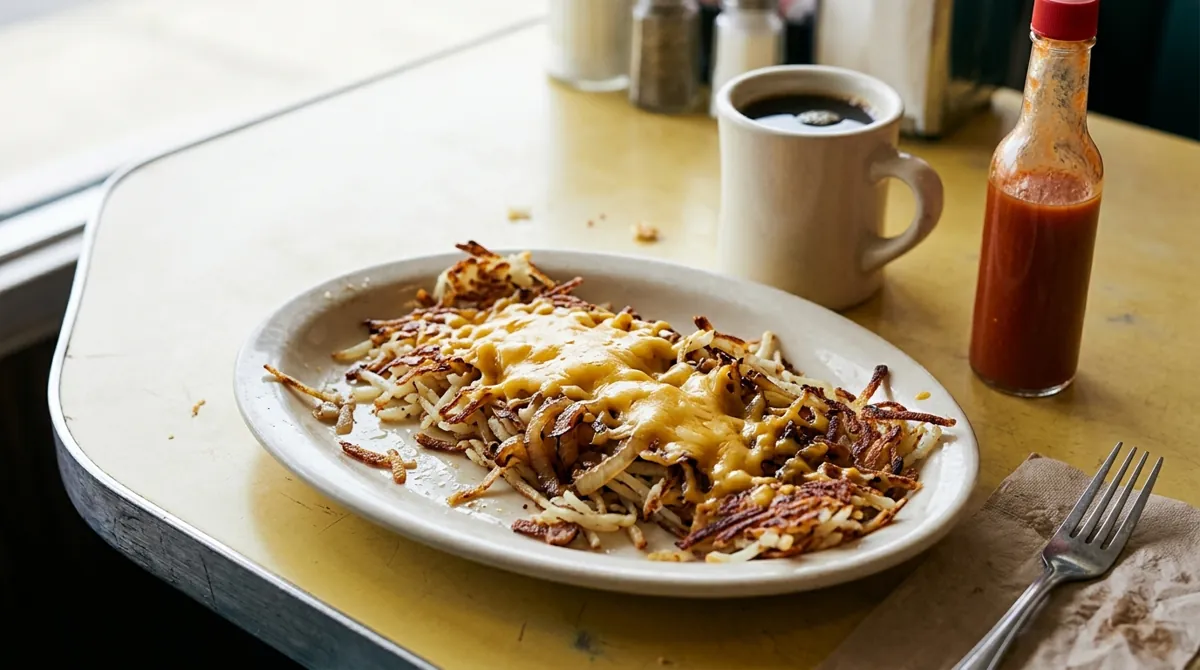
Scattered, Smothered and Covered Hash Browns, Inspired by Waffle House
Thin, crisp shredded hash browns scattered across a hot buttered pan, smothered with soft sautéed onions and covered with melted American cheese. Inspired by, not official.
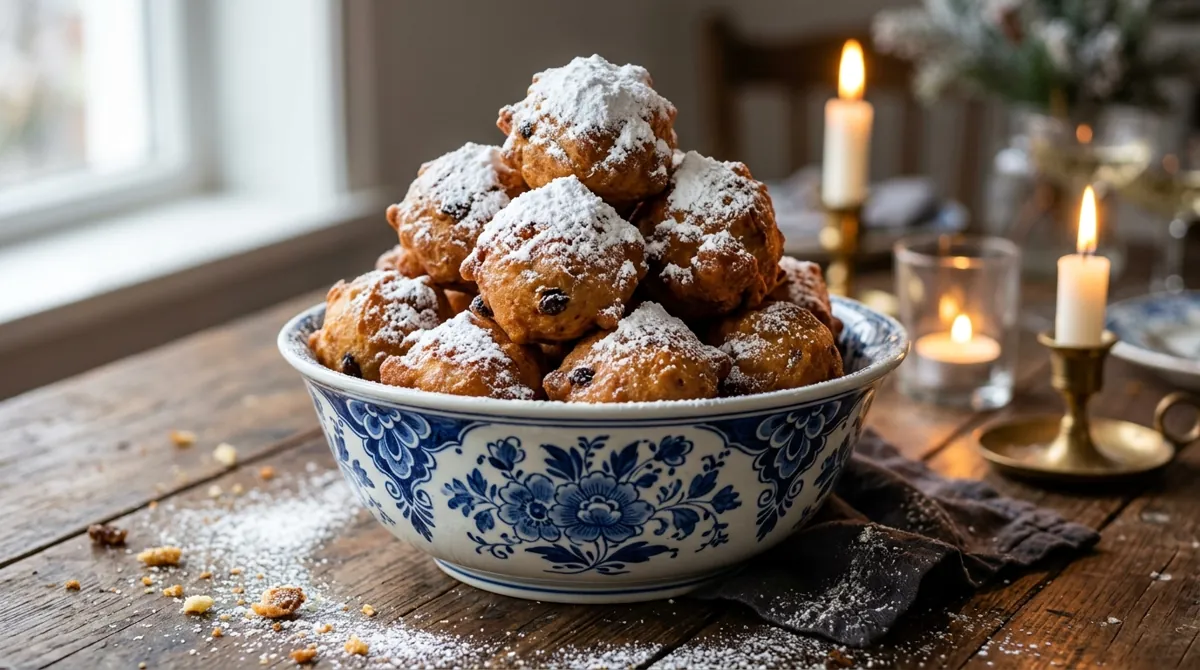
Dutch Oliebollen (New Year's Eve Doughnuts)
Scoops of soft yeast batter studded with raisins and currants, fried round and golden and buried in powdered sugar, the Dutch New Year's Eve treat and a cousin of the olykoeks the Dutch made in old New York.
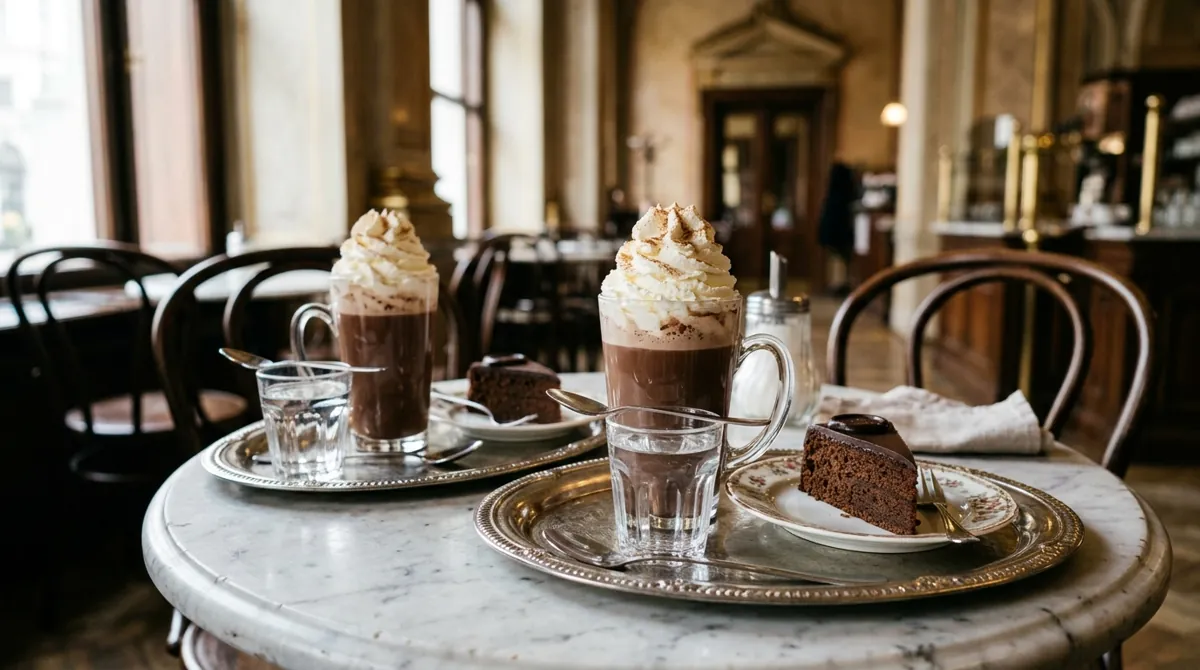
Viennese-Style Hot Chocolate with Whipped Cream (Heiße Schokolade Wiener Art)
Dark chocolate melted into hot milk with a little honey and cinnamon, poured into cups and capped with a big spoon of stiffly whipped cream, the way Austrian and German cafés serve it.
Every other pancake and French toast
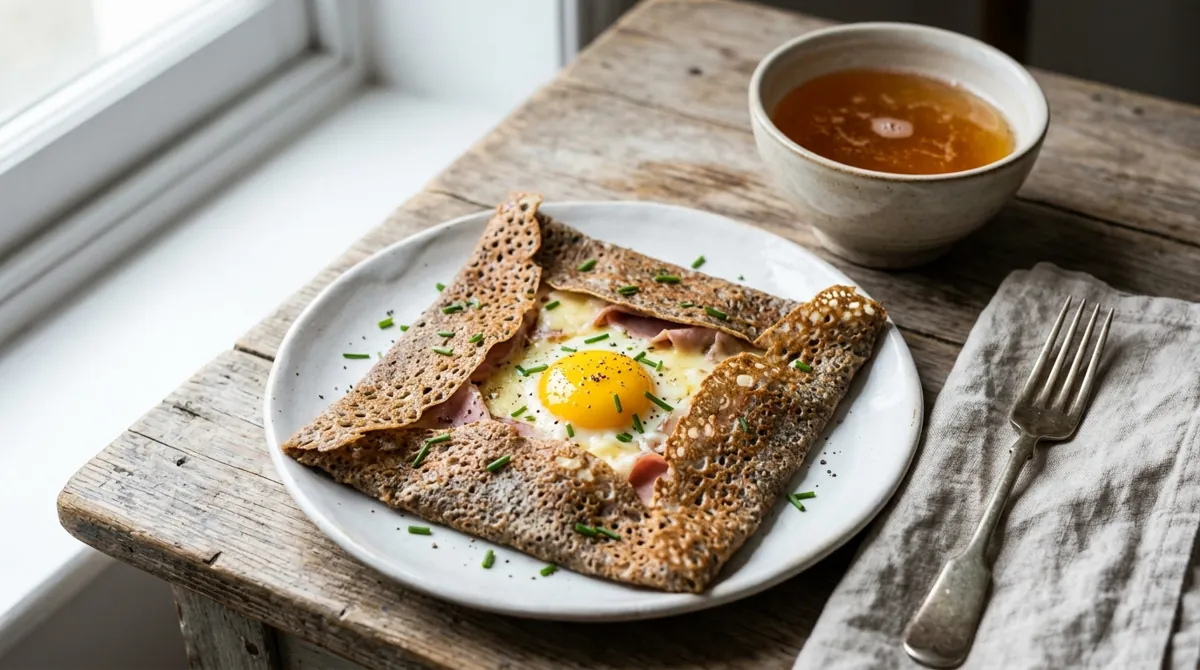
Breton Buckwheat Galette Complète
A thin, lacy buckwheat crêpe from Brittany, filled in the pan with Swiss cheese, ham and an egg, then folded into a square around the yolk.
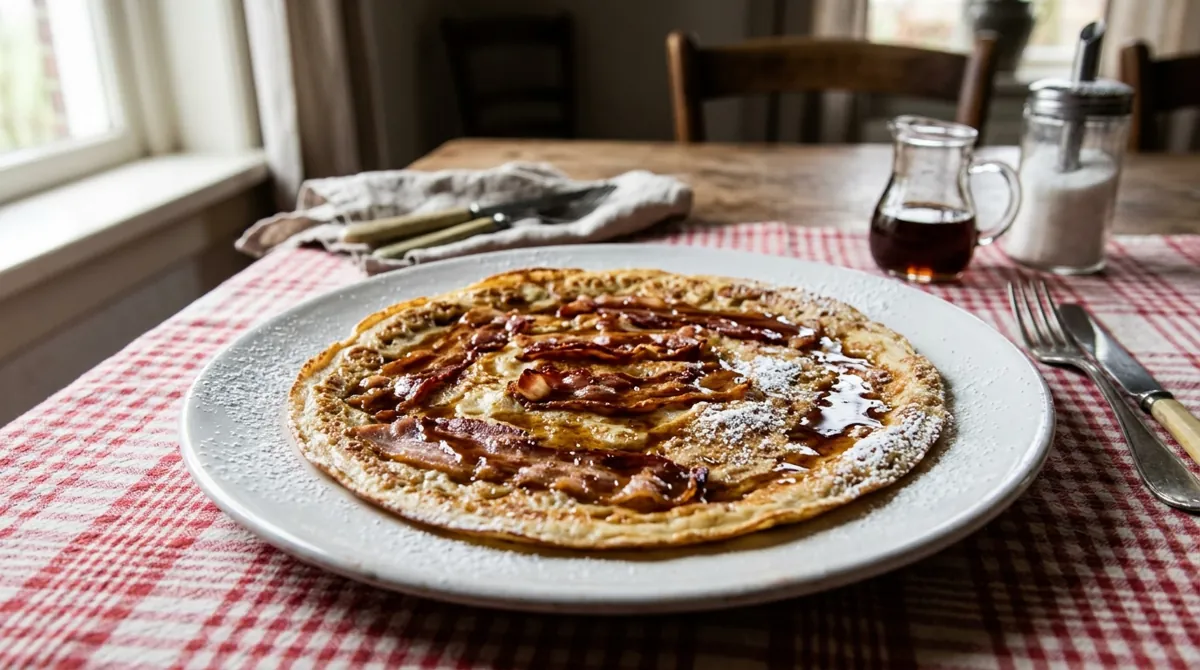
Dutch Pannenkoeken with Bacon (Spekpannenkoeken)
Plate-size Dutch pancakes, thinner than an American pancake and thicker than a crêpe, with strips of bacon baked right into the batter and dark syrup poured on top.
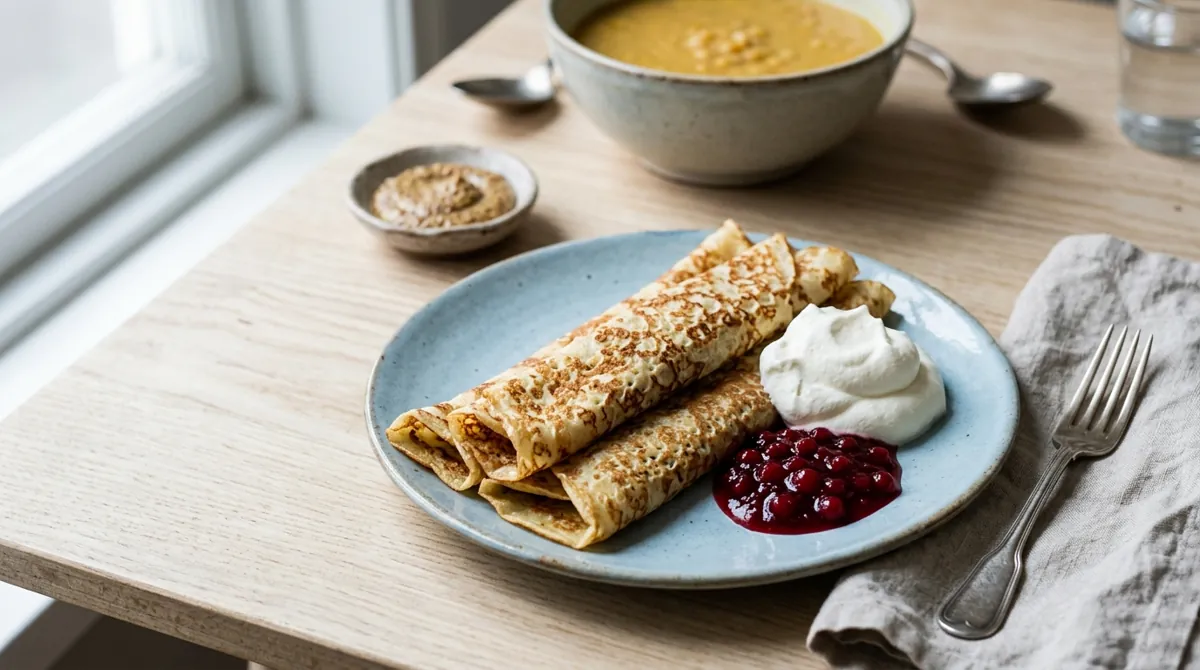
Swedish Pancakes (Pannkakor) with Lingonberry Jam and Cream
Thin, crisp-edged Swedish pancakes made from a simple milk, egg and flour batter, rolled or folded and served with lingonberry jam and whipped cream, Thursday-style.
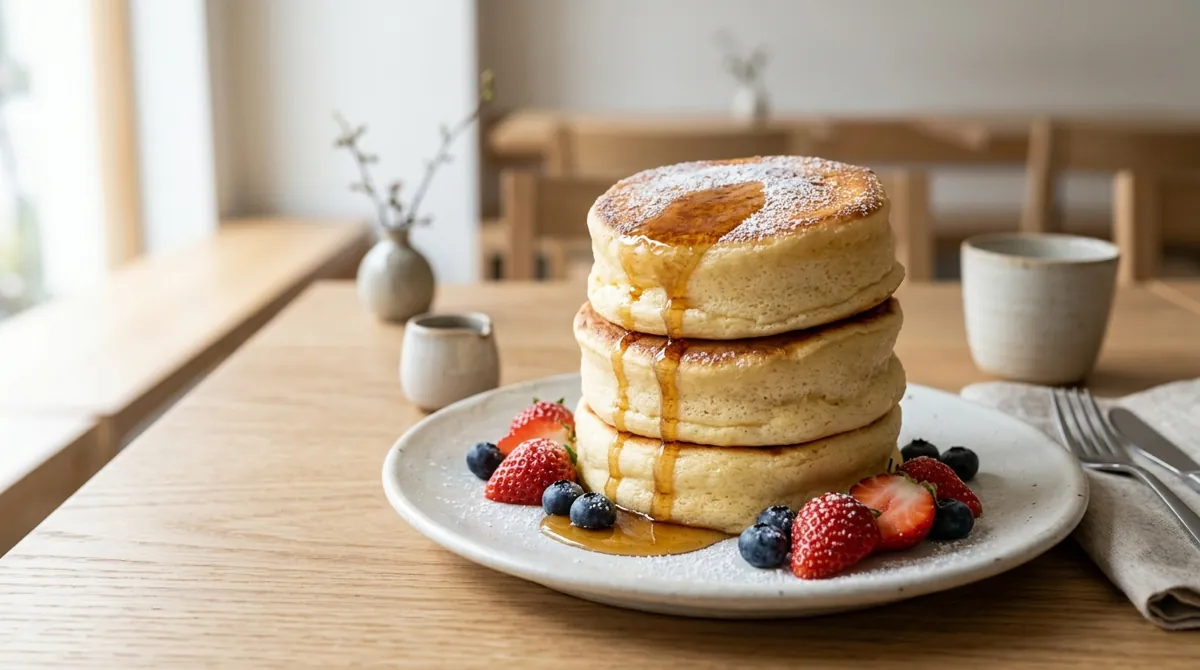
Japanese Soufflé Pancakes
Tall, wobbling pancakes made by folding a stiff meringue into a light yolk batter, then cooking them low and slow under a lid with a splash of water for steam.
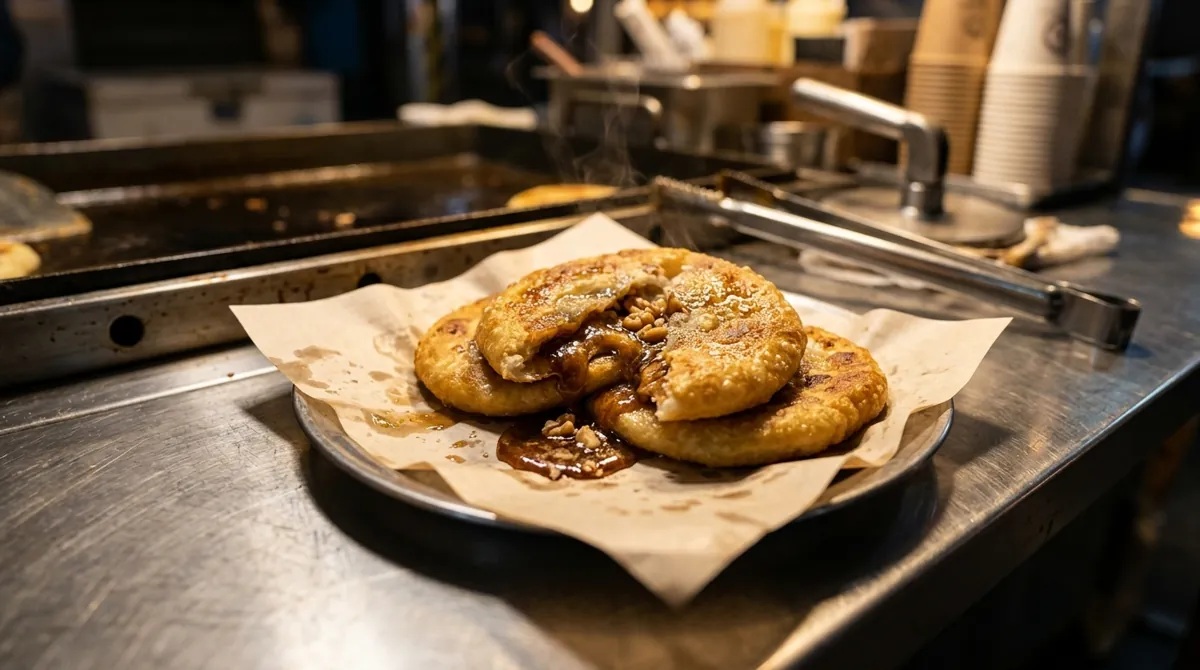
Korean Hotteok (Sweet Filled Pancakes)
A chewy yeasted dough made with sweet rice flour, wrapped around brown sugar, cinnamon and walnuts and pressed flat in an oiled pan until the filling melts into syrup.
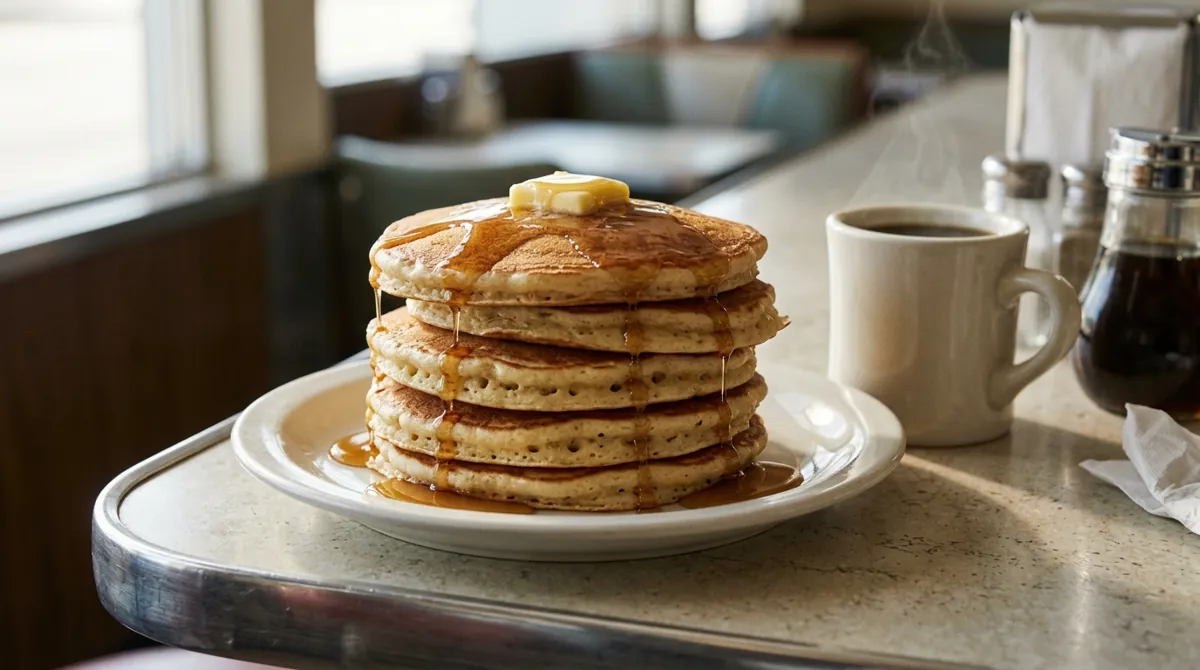
American Buttermilk Pancakes (The Diner Stack)
Fluffy, tangy buttermilk pancakes leavened with baking powder and baking soda, rested so the batter thickens, griddled at 350°F and stacked high with butter and maple syrup.
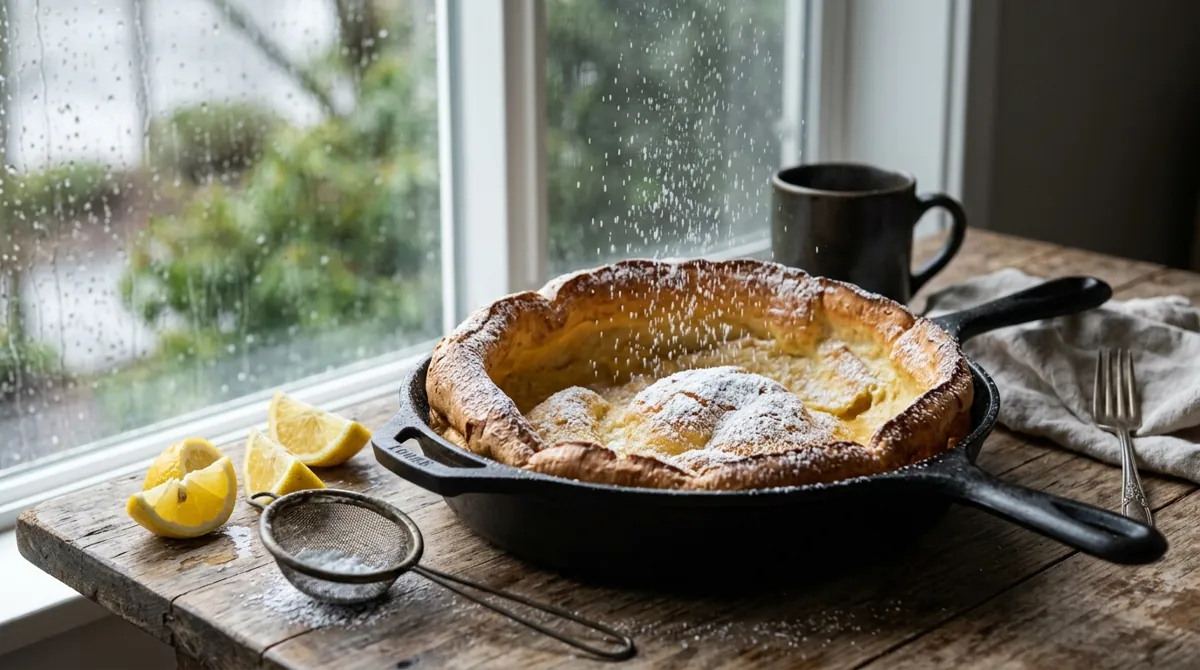
The Dutch Baby (Seattle Oven Pancake)
A blender batter of eggs, milk and flour poured into a skillet of sizzling butter and baked at 425°F until it puffs up high around the edges, served the original way with lemon and powdered sugar.
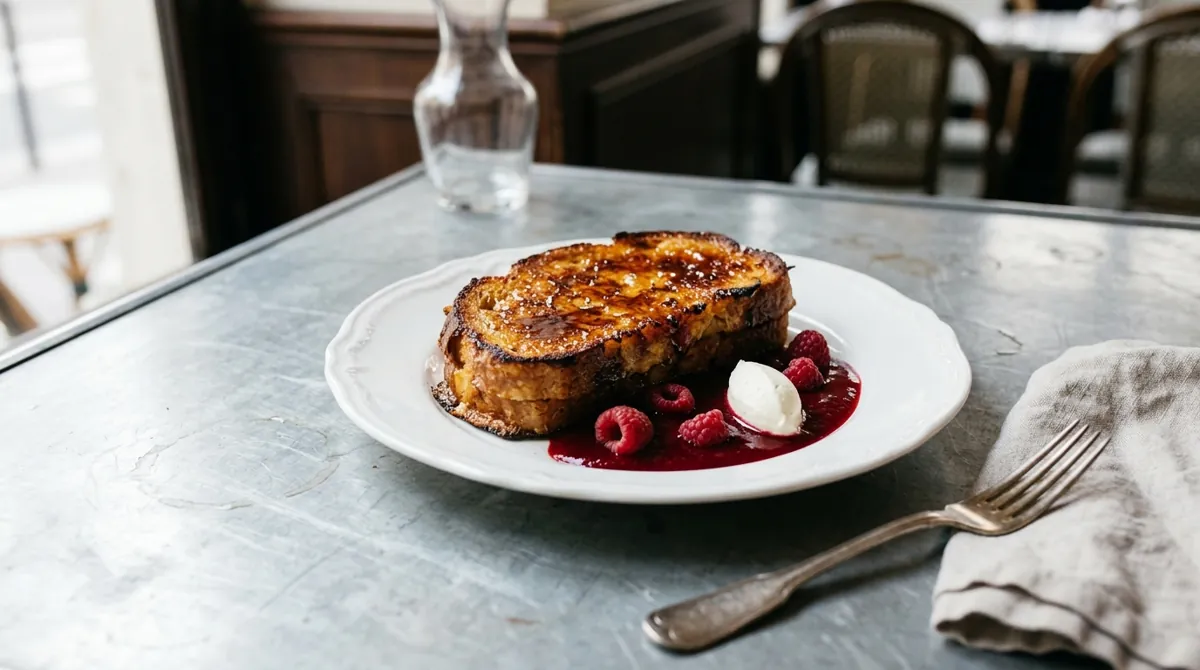
Pain Perdu (French "Lost Bread")
Thick slices of day-old brioche soaked in vanilla milk, eggs and sugar, browned in butter, then sugared and finished in a hot oven until the tops caramelize, served as a dessert the French way.
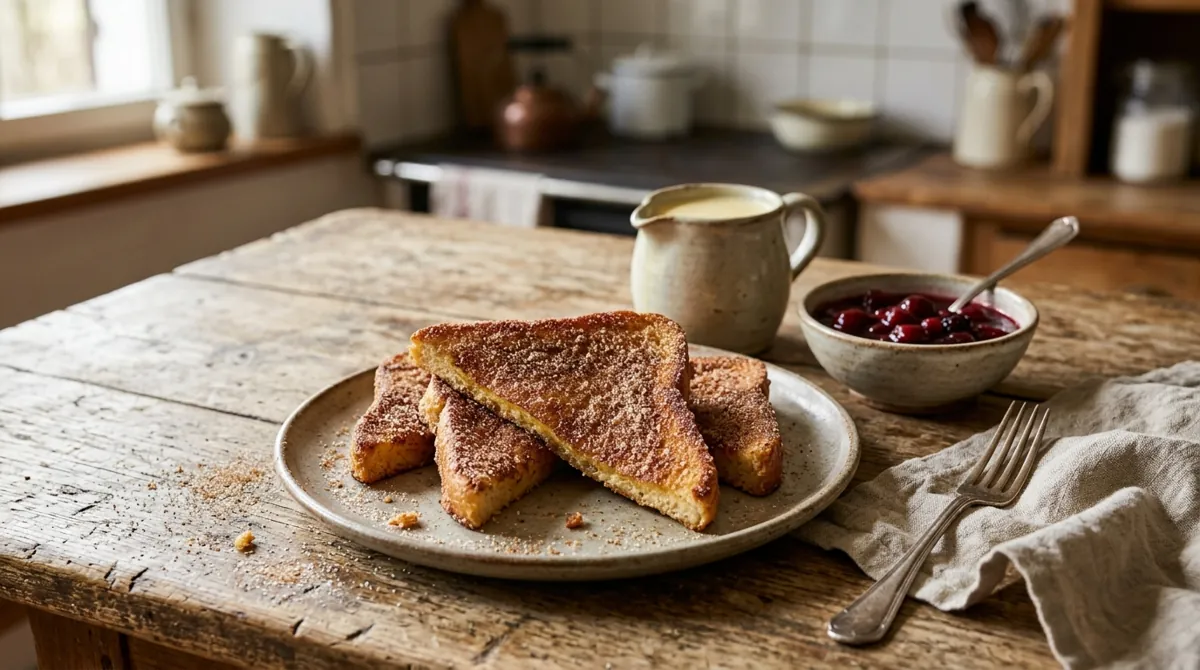
Arme Ritter (German "Poor Knights")
Day-old kaiser rolls halved, soaked in sweet egg milk, fried golden in clarified butter and rolled in cinnamon sugar, Germany's frugal French toast.
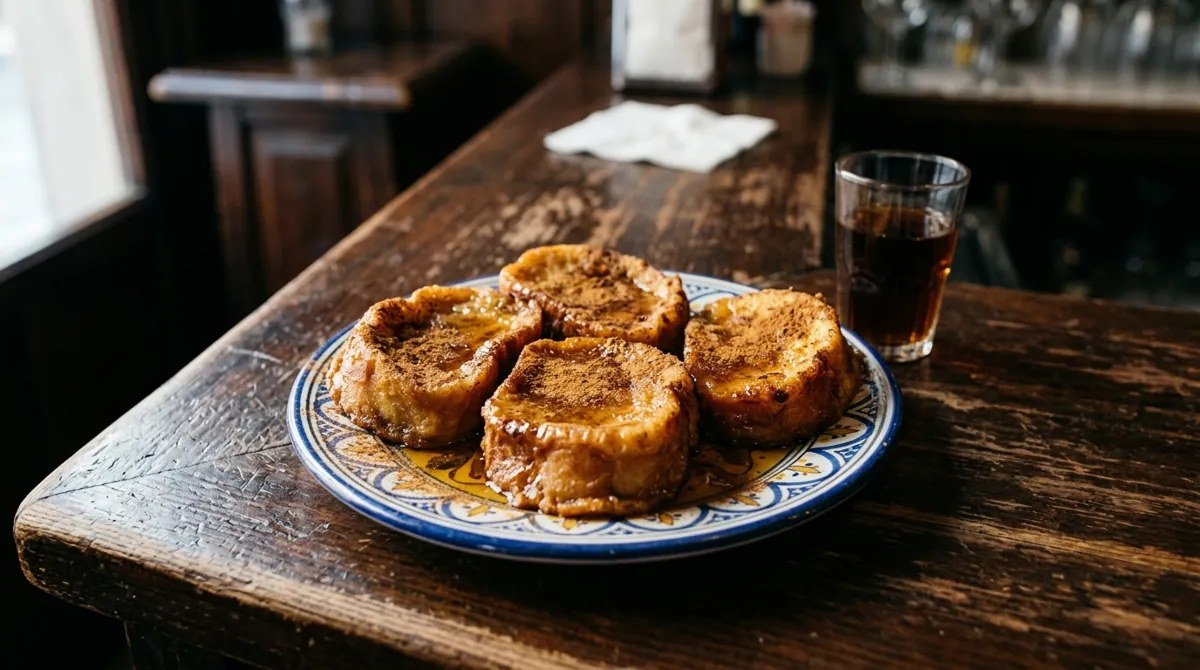
Torrijas (Madrid Holy Week French Toast)
Thick slices of day-old bread soaked in milk steeped with cinnamon and lemon peel, dipped in egg, fried in olive oil and drizzled with honey, the Lent and Holy Week sweet of Madrid.
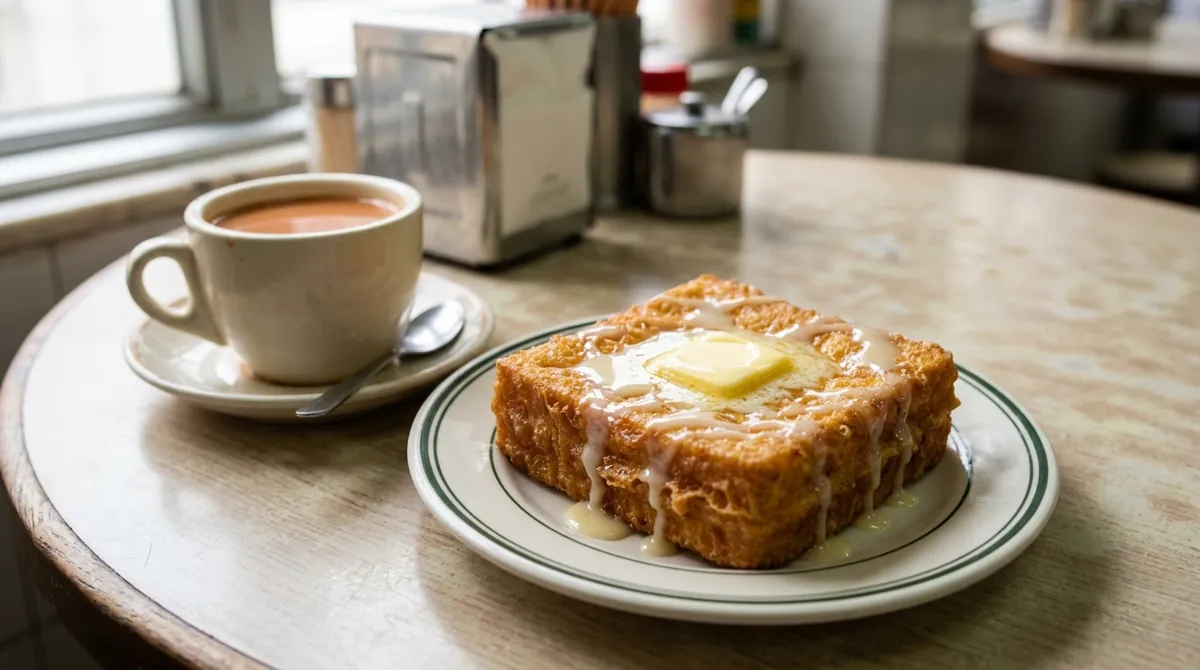
Hong Kong French Toast (Sai Do Si)
Thick white bread stuffed with peanut butter, dipped in egg and deep-fried until crunchy, then topped with a pat of butter and a drizzle of condensed milk, cha chaan teng style.
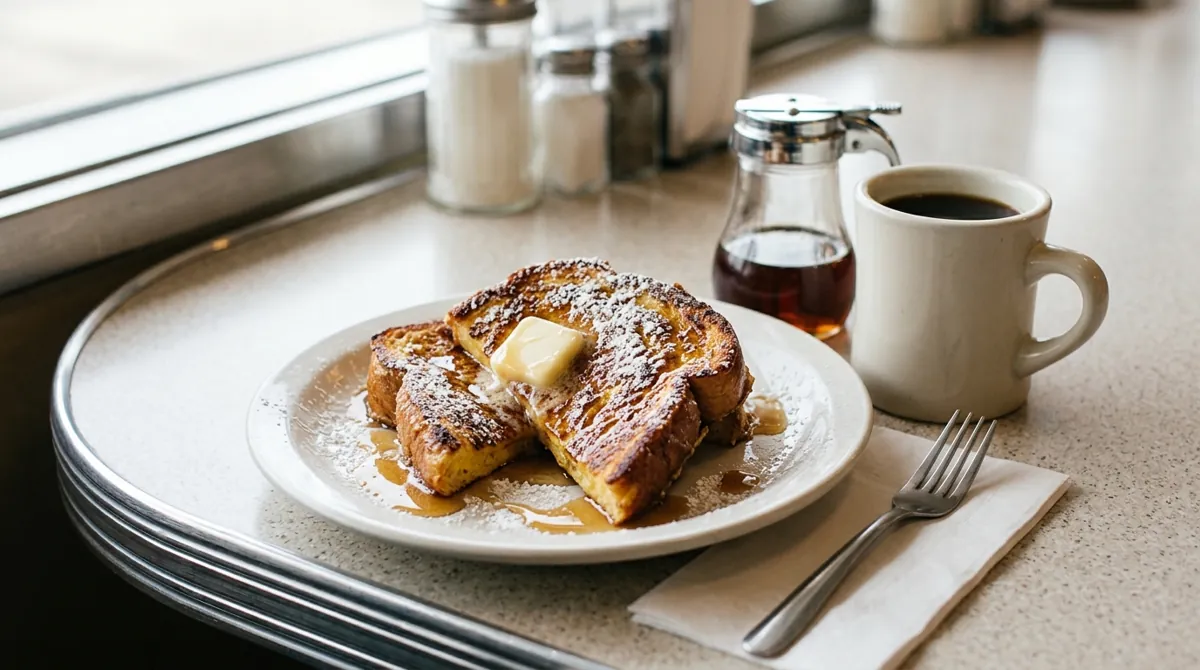
American Diner French Toast
Day-old challah dipped in a light vanilla batter with a little flour, browned in butter in a cast-iron skillet, and served the American way with butter, powdered sugar and maple syrup.
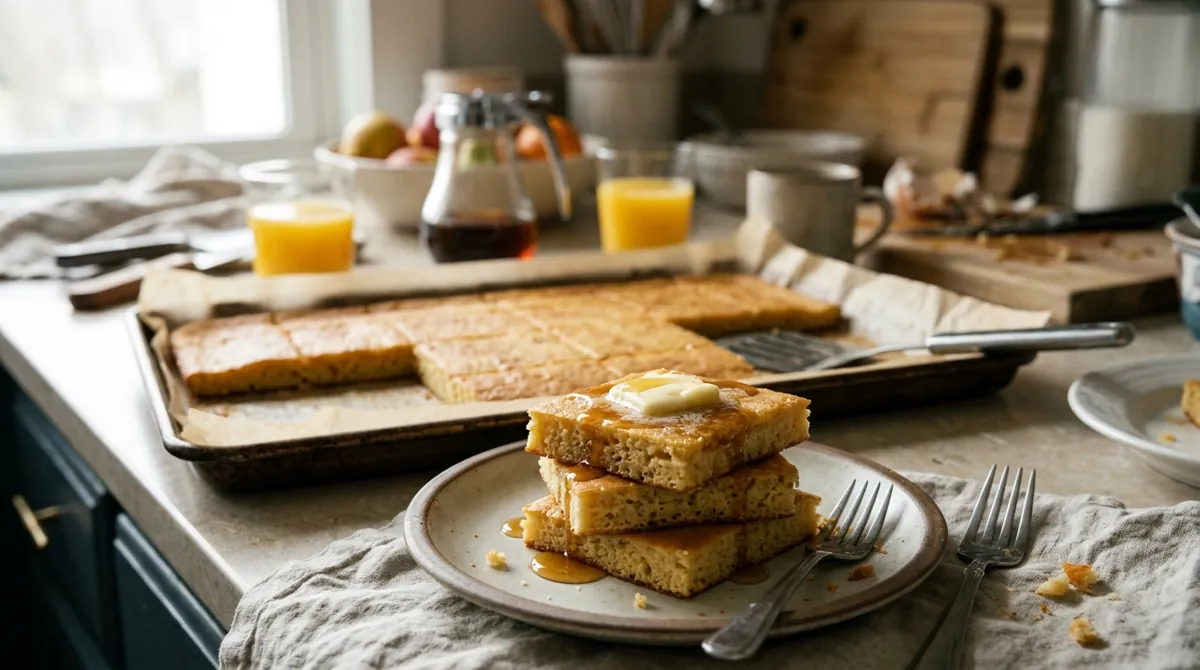
Sheet-Pan Pancakes
One big buttermilk-style pancake batter spread in a sheet pan and baked at 375°F for about 20 minutes, then cut into squares so everyone eats hot pancakes at the same time.
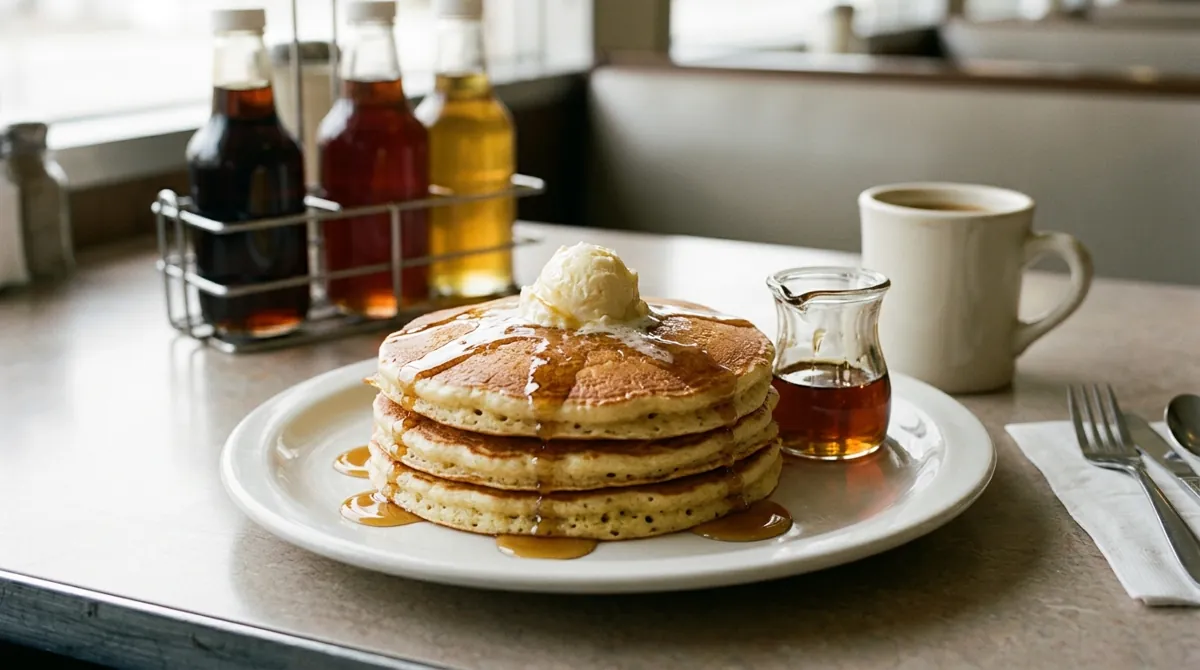
Diner-Style Buttermilk Pancakes, Inspired by IHOP
A blender batter of buttermilk, oil and a little sugar, raised with baking soda alone, griddled into tender 5-inch pancakes in the style of the all-day pancake house. Inspired by, not official.
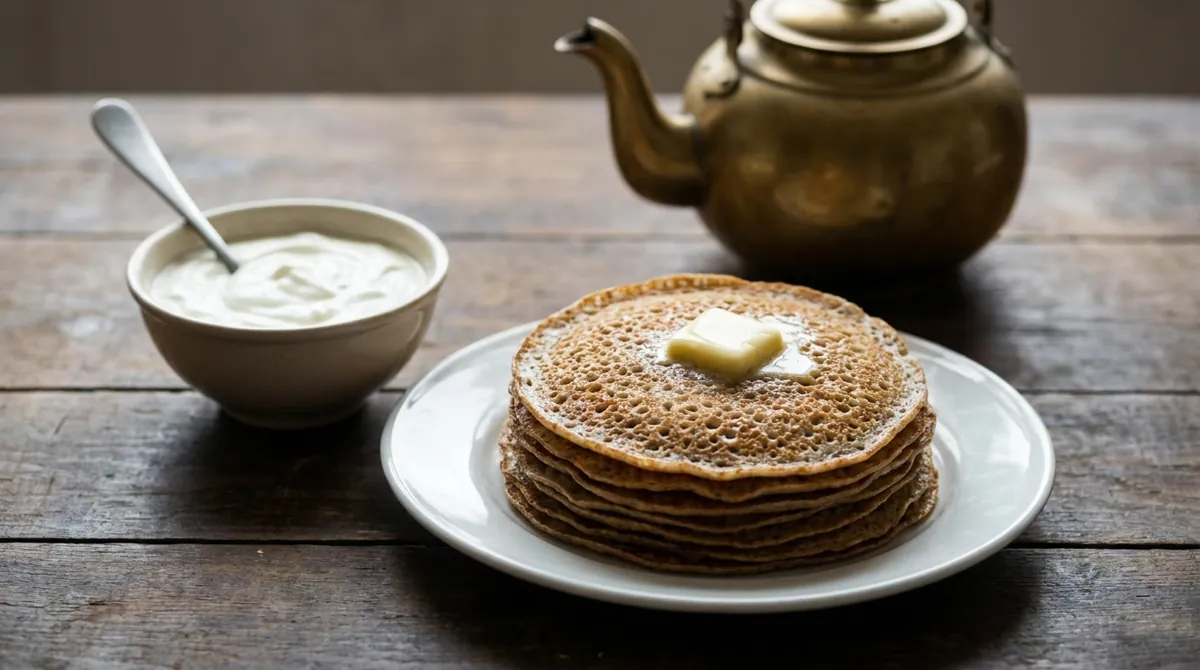
Russian Buckwheat Blini
Small, yeast-raised buckwheat pancakes lightened with whipped egg whites, griddled in butter and served warm with sour cream, the pancake Russians eat all through Maslenitsa, the butter week before Lent.
Meatballs of the World

Italian-American Meatballs
Big, tender meatballs braised for an hour in red sauce over spaghetti. The one most Americans grew up with.

Pallottine (Abruzzo Meatballs)
Tiny meatballs, smaller than a marble, tossed right through square spaghetti alla chitarra. No bread at all.

Swedish Meatballs (Köttbullar)
Small, soft meatballs browned in butter, in a cream sauce made from the same pan, with lingonberry jam on the plate.

Danish Frikadeller
Pork meatballs shaped with a spoon and fried slowly in butter, crusty outside and soft in the middle.

Königsberger Klopse
German meatballs that are never fried: poached, then served in a creamy white sauce with capers.

Spanish Albóndigas in Almond Saffron Sauce
The tapas bar classic: small meatballs in a golden sauce thickened with fried almonds and bread.

Mexican Albóndigas with Chipotle and Mint
Soft meatballs with rice and fresh mint inside, simmered in a smoky tomato and chipotle broth.

Izgara Köfte (Turkish Grilled Meatballs)
Small, flat meatballs kneaded hard, rested cold, and charred on a hot grill pan.

Lion's Head Meatballs
Big, soft pork meatballs, stirred into a sticky paste, fried to set, then braised in a savory sauce.

Chicken Tsukune
Japan's chicken meatball: kneaded sticky, grilled on skewers, glazed with sweet soy tare, dipped in egg yolk.