
Russian Buckwheat Blini
Small, yeast-raised buckwheat pancakes lightened with whipped egg whites, griddled in butter and served warm with sour cream, the pancake Russians eat all through Maslenitsa, the butter week before Lent.
🍳Cook alongOne move at a time, with real timers
 Edited by JP Lambiase
Change the estimate
Swaps change the price only: cook any meat to its own safe temperature. Where these numbers come from
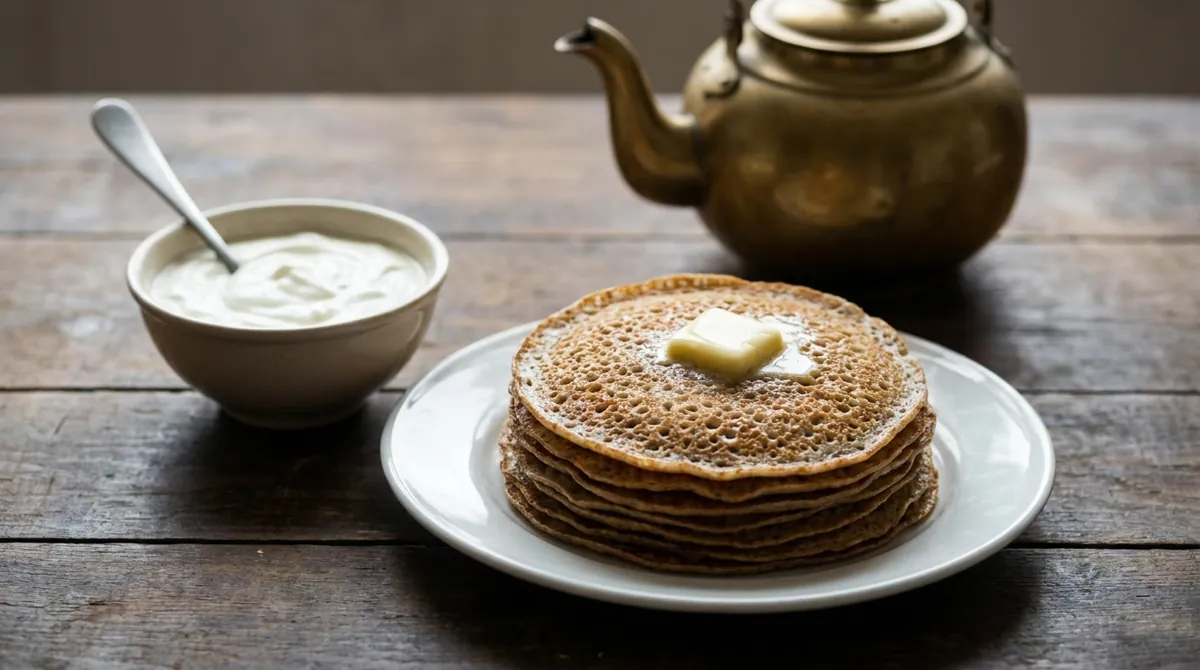
Blini are Russian pancakes, often made from a yeast-raised batter of buckwheat, or of wheat flour and milk, with a history dating to the Middle Ages; wheat is now the most popular flour, a thinner unyeasted kind is also common, and they were once baked in a Russian oven rather than in a pan (Wikipedia, citing Mason 2014:). The same article says blini were made at the end of winter during Maslenitsa ("butter week") and eaten twice a day, and also at funerals and in prayers for the dead. Its proverb "the first blin is lumpy" means a first try is expected to fail.
Maslenitsa is an Eastern Slavic religious and folk holiday held in the last week before Great Lent, the eighth week before Orthodox Easter, so its date moves every year; Cheesefare Sunday, its last day, is the last day dairy may be eaten until Easter, and the week ends with a straw Lady Maslenitsa burned on a bonfire, sometimes with leftover pancakes thrown in (Wikipedia:). In 2027 Orthodox Easter is May 2, so Maslenitsa runs March 8 to 14. In English, "blini" usually means small savory party pancakes, and caviar is a popular topping at Russian-style parties and restaurants abroad (Wikipedia, Blini). America knows blini as a bite-size cocktail canapé; in Russia they are a week of breakfasts, lunches and dinners.
Why it works the kitchen science
A two-stage rise
The sponge gives the yeast time to work through the buckwheat before the eggs and butter go in, which builds the sour, earthy flavor King Arthur describes as buckwheat's "earthy, sweet taste".
Whites folded in last
Whipped egg whites added just before cooking lighten a heavy, gluten-free flour, so the blini puff and stay tender instead of turning dense.
🧰 You'll need 6 items
Everything the steps call for. Tick off what you have before you start.
Appliances
Pans and pots
Tools
Step by step
- Step 1
Make the sponge: stir the buckwheat flour, warm water, dry milk and yeast together in a medium bowl. Cover and let it rest 30 to 60 minutes, until bubbly.
- Step 2
Whisk the egg yolks, milk, sugar and salt, then stir them into the sponge. Cover and let it rest 30 to 45 minutes more. Meanwhile, let the egg whites come to room temperature.
- Step 3
Heat the oven to 200°F. Just before cooking, whisk the melted butter into the batter. Beat the egg whites to soft peaks and fold them gently into the batter.
- Step 4
Heat a griddle or heavy skillet over medium heat about 3 minutes and grease it lightly with butter. Spoon 2 to 3 tablespoons of batter per blin, leaving room between them.
- Step 5
Cook 1 to 2 minutes, until the edges look dry and bubbles form on top that don't break. Flip and cook about 1 minute more, until golden.
- Step 6
Hold the finished blini in the warm oven while you cook the rest, buttering the griddle now and then. Expect the first one to be a practice blin.
- Step 7
Serve warm with sour cream, and smoked salmon or salmon roe if you like.
Russian Buckwheat Blini
Serves 6 (4 blini each) · about 24 blini, each 4 inches across · 2 hr 40 min total
Sponge
- 1 1/3 cups (159 g) buckwheat flour
- 1 1/2 cups (340 g) warm water, about 100°F
- 2 tbsp (14 g) nonfat dry milk
- 1 1/2 tsp instant yeast
Batter
- 2 large eggs, separated
- 1/2 cup (113 g) whole milk
- 1 tsp sugar
- 1/2 tsp table salt
- 4 tbsp (57 g) unsalted butter, melted
- About 1 tbsp butter, for the griddle
To serve
- 3/4 cup sour cream
- Smoked salmon or salmon roe (optional)
Equipment: Oven, Heavy skillet, Griddle, Measuring cups and spoons, Mixing bowls, Whisk
Method
- Make the sponge: stir the buckwheat flour, warm water, dry milk and yeast together in a medium bowl. Cover and let it rest 30 to 60 minutes, until bubbly.
- Whisk the egg yolks, milk, sugar and salt, then stir them into the sponge. Cover and let it rest 30 to 45 minutes more. Meanwhile, let the egg whites come to room temperature.
- Heat the oven to 200°F. Just before cooking, whisk the melted butter into the batter. Beat the egg whites to soft peaks and fold them gently into the batter.
- Heat a griddle or heavy skillet over medium heat about 3 minutes and grease it lightly with butter. Spoon 2 to 3 tablespoons of batter per blin, leaving room between them.
- Cook 1 to 2 minutes, until the edges look dry and bubbles form on top that don't break. Flip and cook about 1 minute more, until golden.
- Hold the finished blini in the warm oven while you cook the rest, buttering the griddle now and then. Expect the first one to be a practice blin.
- Serve warm with sour cream, and smoked salmon or salmon roe if you like.
Adapted from Brinna Sands, "Blini", King Arthur Baking (updated June 24, 2022), as written. The sponge (159 g buckwheat flour, 340 g warm water, 14 g dry milk, 1 1/2 tsp instant yeast), the batter (2 eggs separated, 113 g milk, 1 tsp sugar, 1/2 tsp salt, 57 g melted butter), the rise times, the 2 to 3 tablespoons per blin, the 200°F holding oven and the freezing note are King Arthur's. King Arthur says only "heated" griddle; the medium heat and the first-side time are ours. King Arthur names no toppings; sour cream is our pick, and the optional smoked salmon or salmon roe follows Wikipedia's caviar note. The serving count is ours. King Arthur Baking. Ingredient list follows the source; the method is in our own words.
All sources (3)
Tips
- Freeze leftovers between sheets of wax paper or parchment up to a month; reheat in a toaster or a 300°F oven for 10 minutes (King Arthur).
- For bigger, Maslenitsa-style blini, use 1/3 cup of batter in a 9-inch skillet and stack them with butter between the layers (our suggestion).
- Buckwheat flour is gluten-free, but King Arthur's recipe has none of the wheat flour some cooks blend in; check the dry milk and toppings if you cook for someone with celiac disease.
The rules people argue about
What the sources agree on, what they don't, and what is just a good story.
- Real blini are buckwheat. Documented as not so today: Wikipedia says buckwheat and wheat are both used and wheat is now the most popular.
- Real blini are yeasted. Documented as traditional (Wikipedia), with a thinner unyeasted kind also common.
- The round, golden blin stands for the sun. Folklore: repeated widely in travel and student pieces; neither Wikipedia article we opened says it, and we found no reputable source.
- Maslenitsa is pagan. Disputed: Wikipedia calls it a religious and folk holiday that keeps elements of Slavic mythology and says it "may be" the oldest surviving Slavic holiday; it is also the Orthodox week before Lent.
- The first blin is always lumpy. Documented as a proverb (Wikipedia), not a rule.
- Blini are tiny party pancakes. Documented as the English-language use (Wikipedia); in Russia they range from small to plate-size.
Serve it with
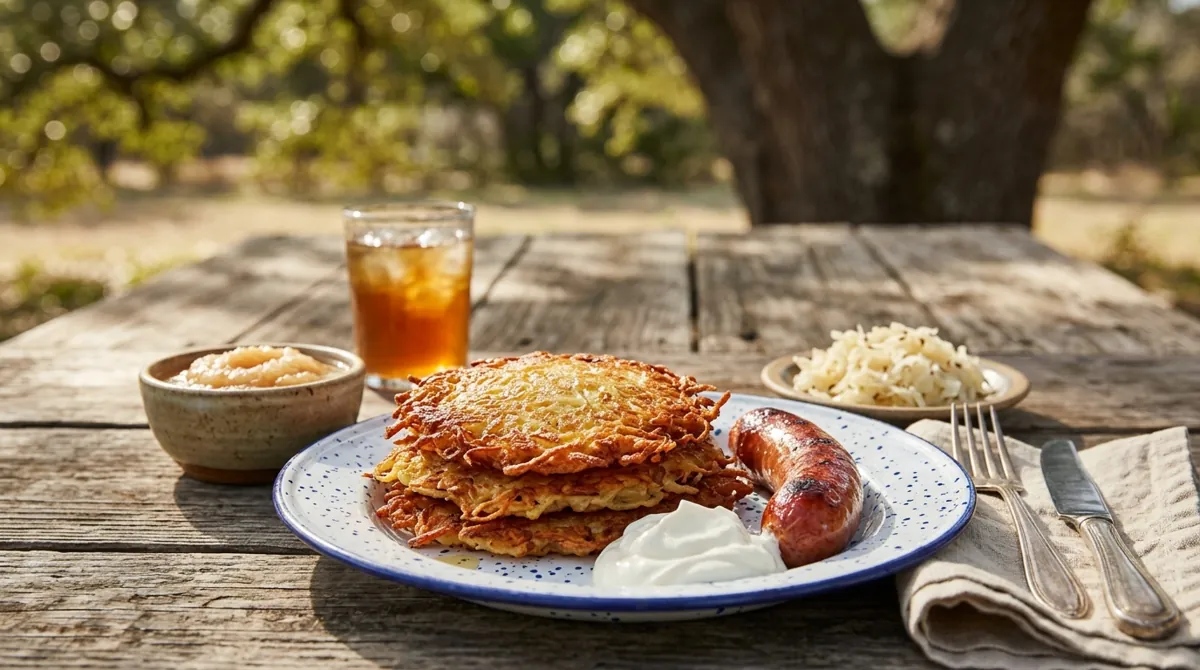
Texas Potato Pancakes
The Texas German take on Kartoffelpuffer: towel-wrung russets, onion, egg and a good half cup of flour, fried in 1/4 inch of oil into big, lacy 4-inch pancakes with sour cream and applesauce.
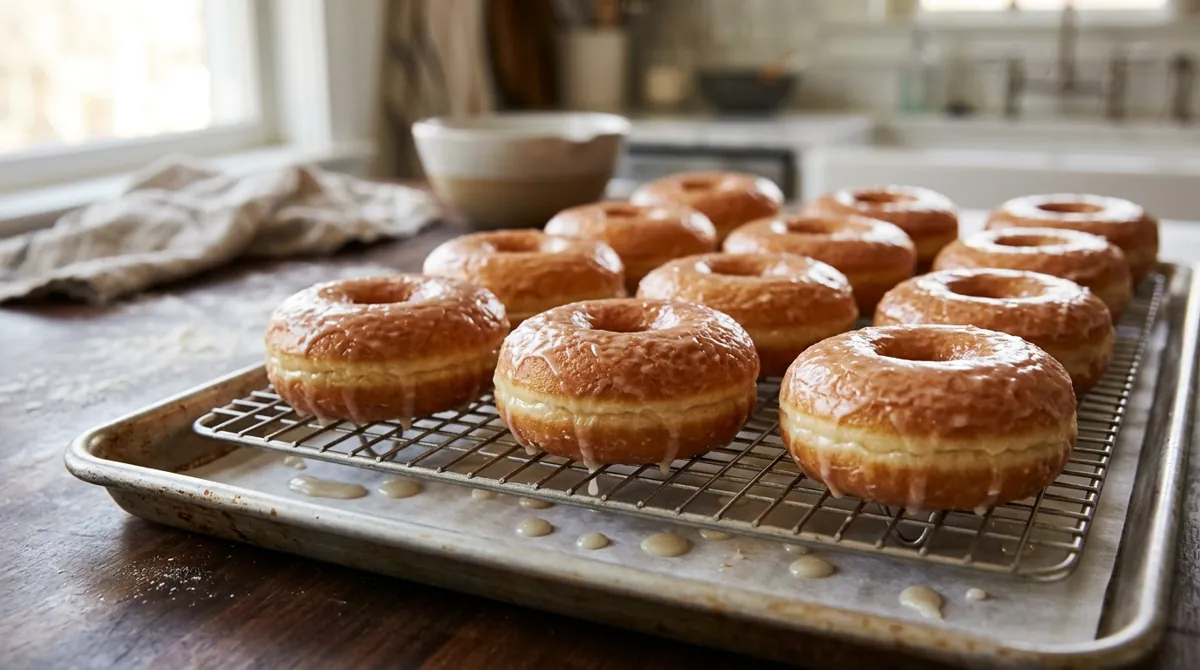
Classic Yeast-Raised Glazed Doughnuts
Tall, airy ring doughnuts from a buttery dough that rests overnight in the fridge, proofed in a steamy oven, fried golden and dipped in a sheer vanilla glaze that sets matte and crackly.
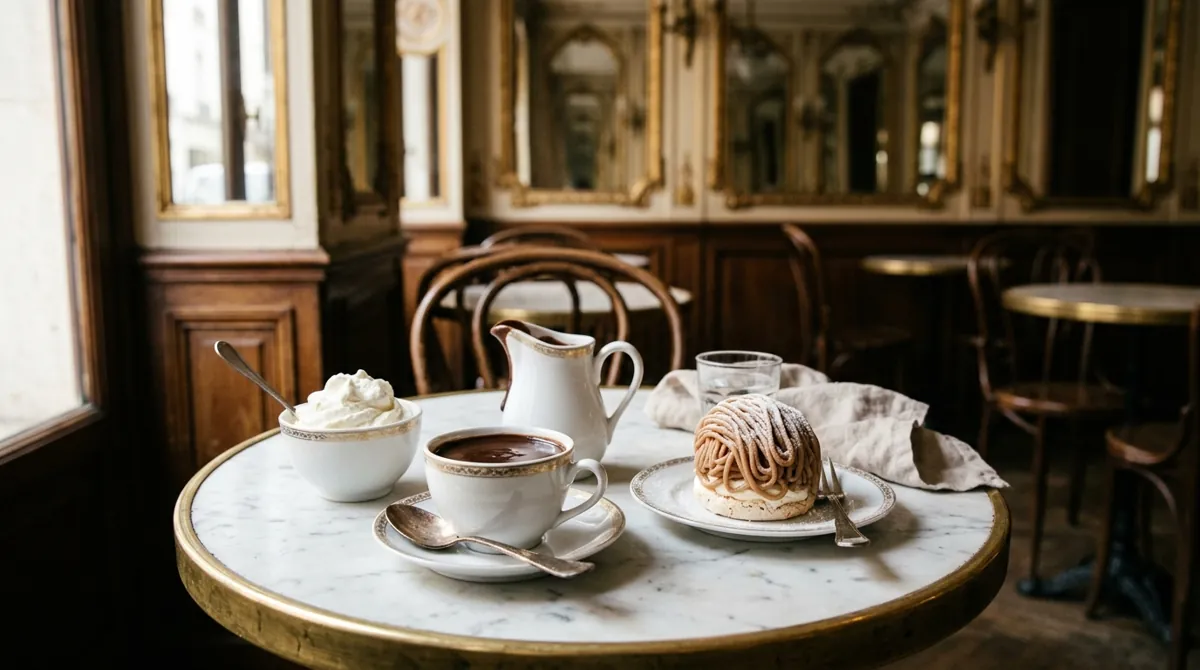
Parisian Chocolat Chaud
Whole milk and very good bittersweet chocolate, nothing else but an optional spoon of brown sugar, simmered until thick and served in tiny cups the Paris café way. Inspired by the famous thick chocolate at Angelina; not Angelina's recipe.
Every other pancake and French toast
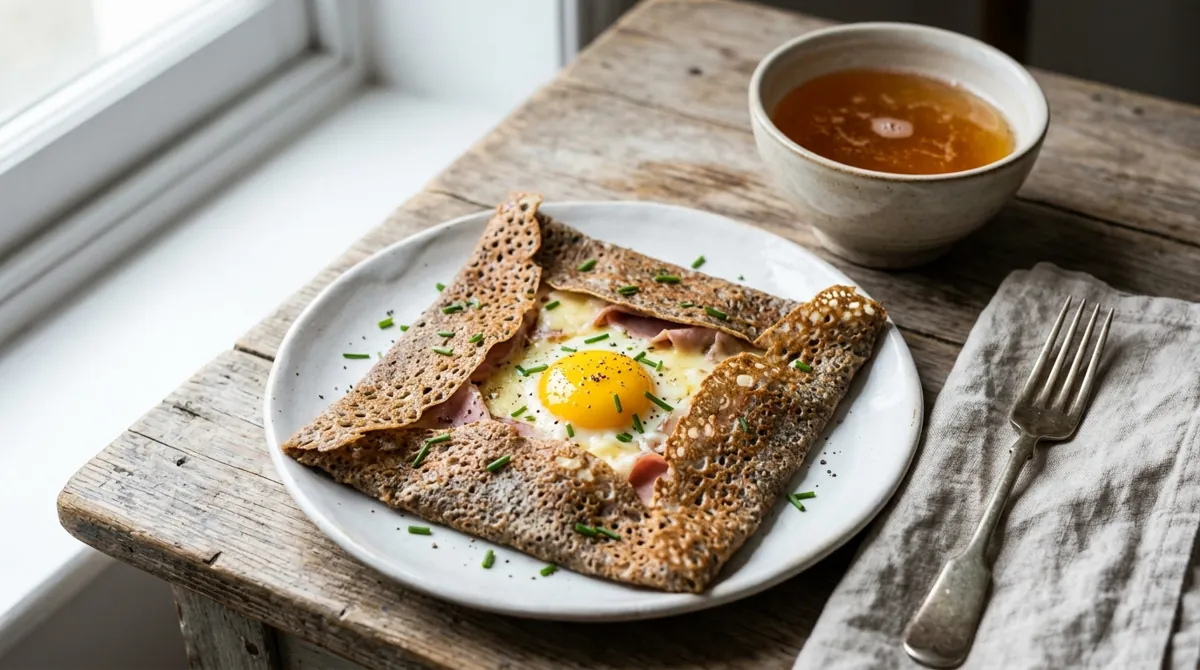
Breton Buckwheat Galette Complète
A thin, lacy buckwheat crêpe from Brittany, filled in the pan with Swiss cheese, ham and an egg, then folded into a square around the yolk.
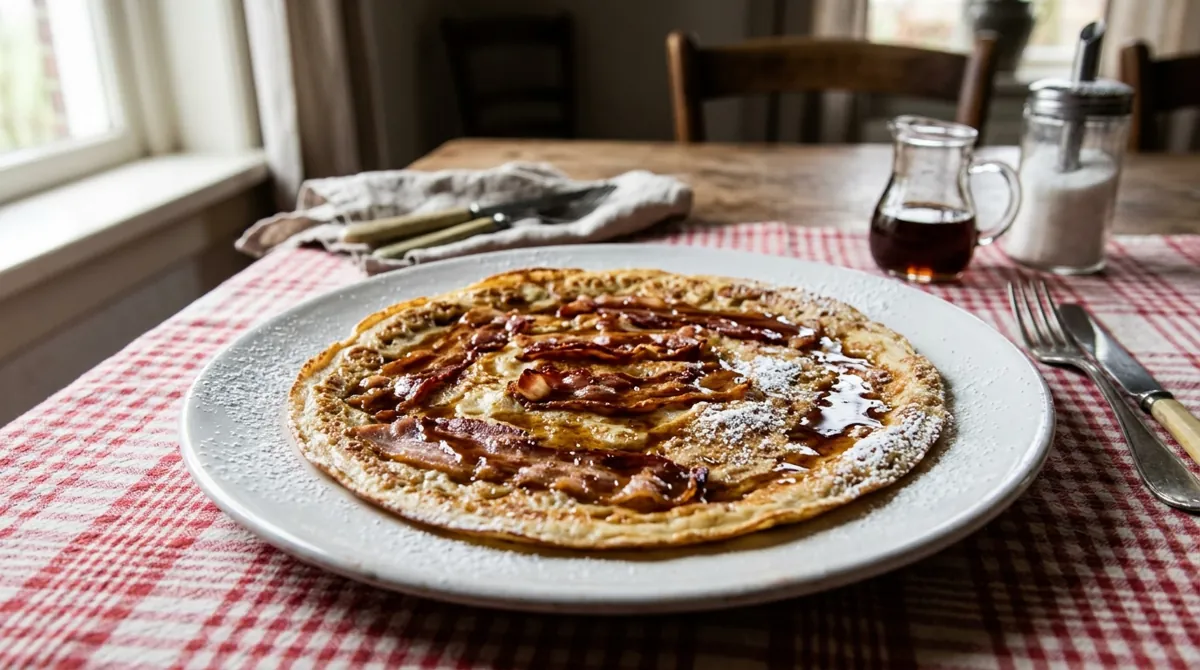
Dutch Pannenkoeken with Bacon (Spekpannenkoeken)
Plate-size Dutch pancakes, thinner than an American pancake and thicker than a crêpe, with strips of bacon baked right into the batter and dark syrup poured on top.
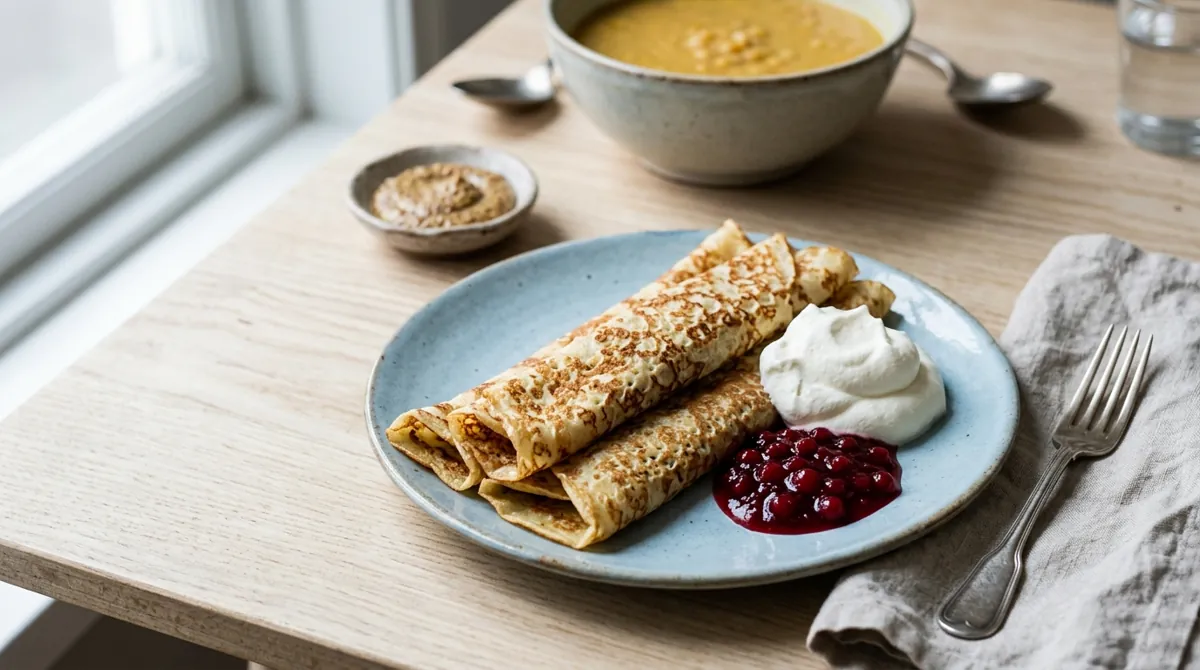
Swedish Pancakes (Pannkakor) with Lingonberry Jam and Cream
Thin, crisp-edged Swedish pancakes made from a simple milk, egg and flour batter, rolled or folded and served with lingonberry jam and whipped cream, Thursday-style.
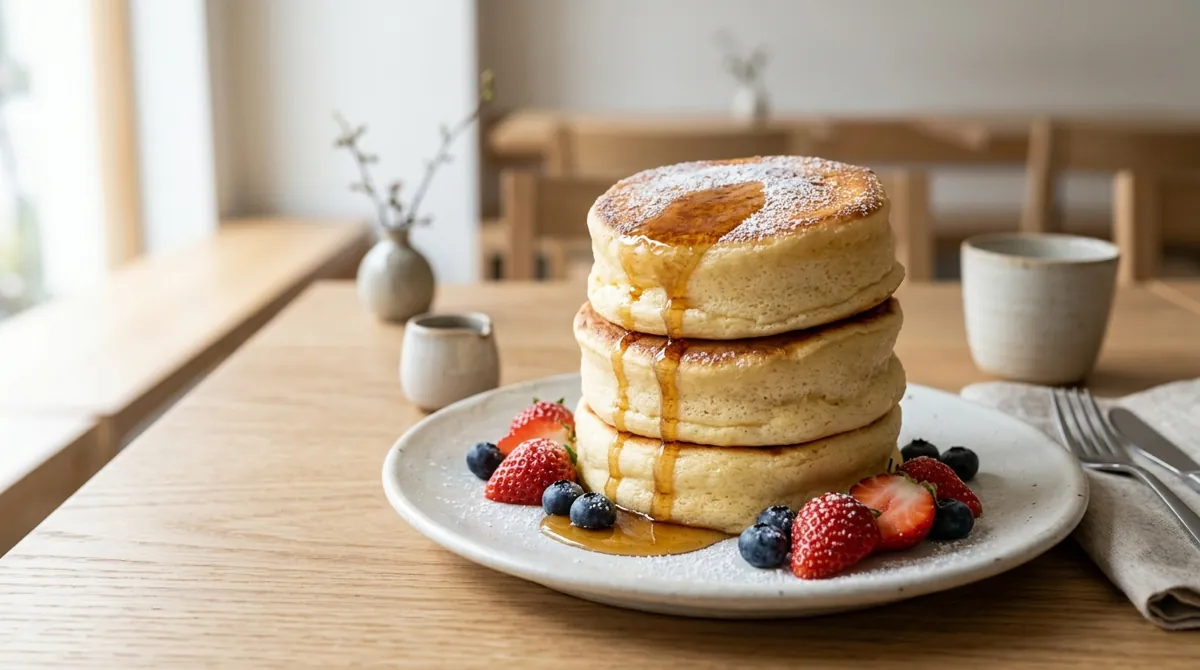
Japanese Soufflé Pancakes
Tall, wobbling pancakes made by folding a stiff meringue into a light yolk batter, then cooking them low and slow under a lid with a splash of water for steam.
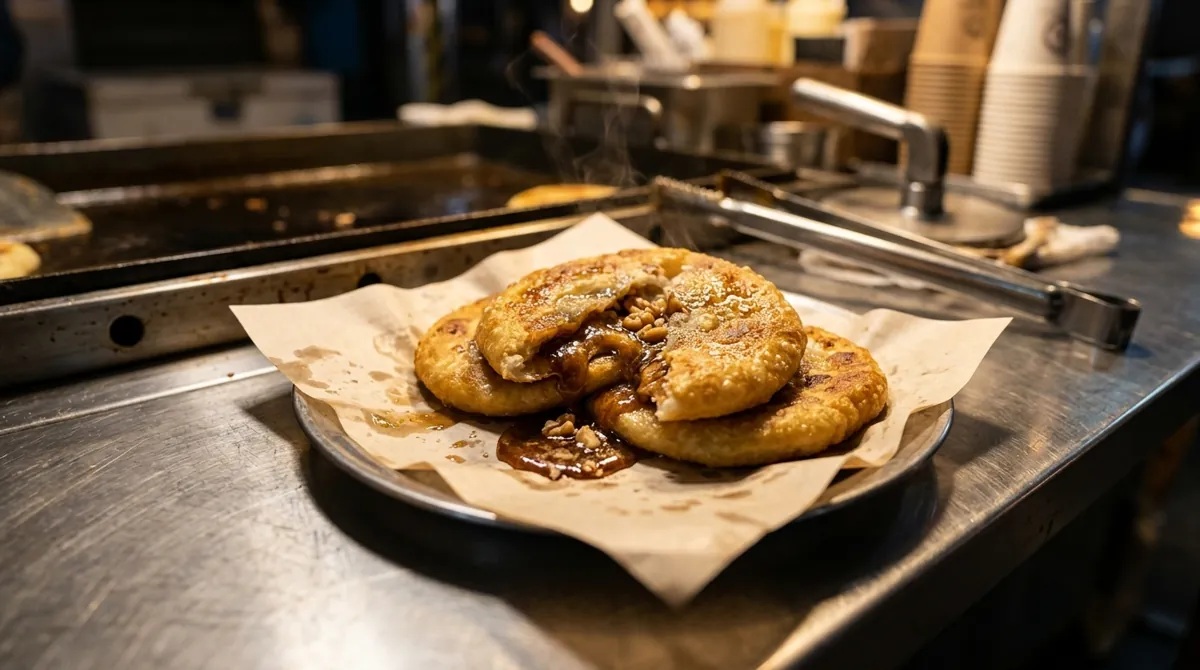
Korean Hotteok (Sweet Filled Pancakes)
A chewy yeasted dough made with sweet rice flour, wrapped around brown sugar, cinnamon and walnuts and pressed flat in an oiled pan until the filling melts into syrup.
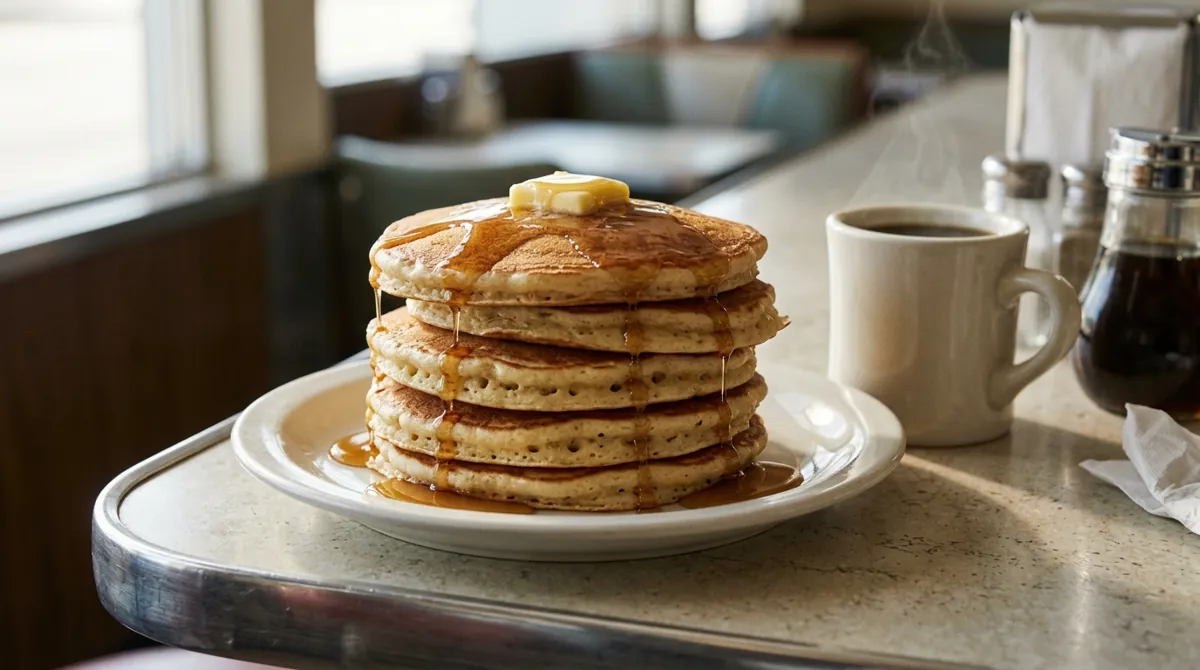
American Buttermilk Pancakes (The Diner Stack)
Fluffy, tangy buttermilk pancakes leavened with baking powder and baking soda, rested so the batter thickens, griddled at 350°F and stacked high with butter and maple syrup.
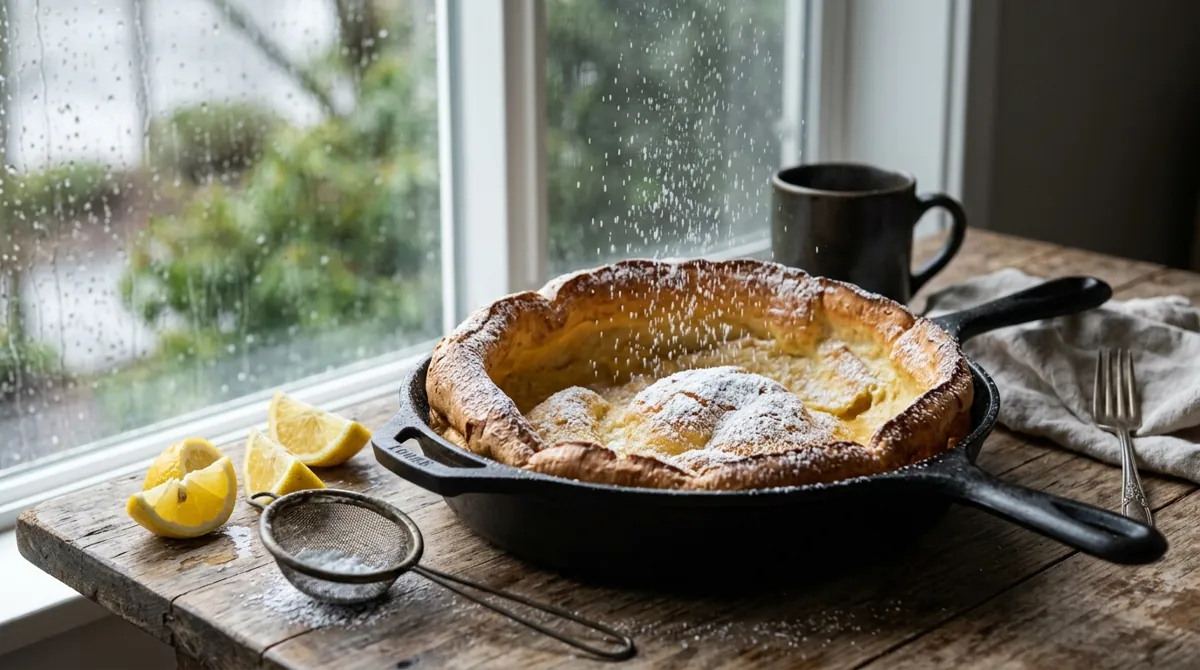
The Dutch Baby (Seattle Oven Pancake)
A blender batter of eggs, milk and flour poured into a skillet of sizzling butter and baked at 425°F until it puffs up high around the edges, served the original way with lemon and powdered sugar.
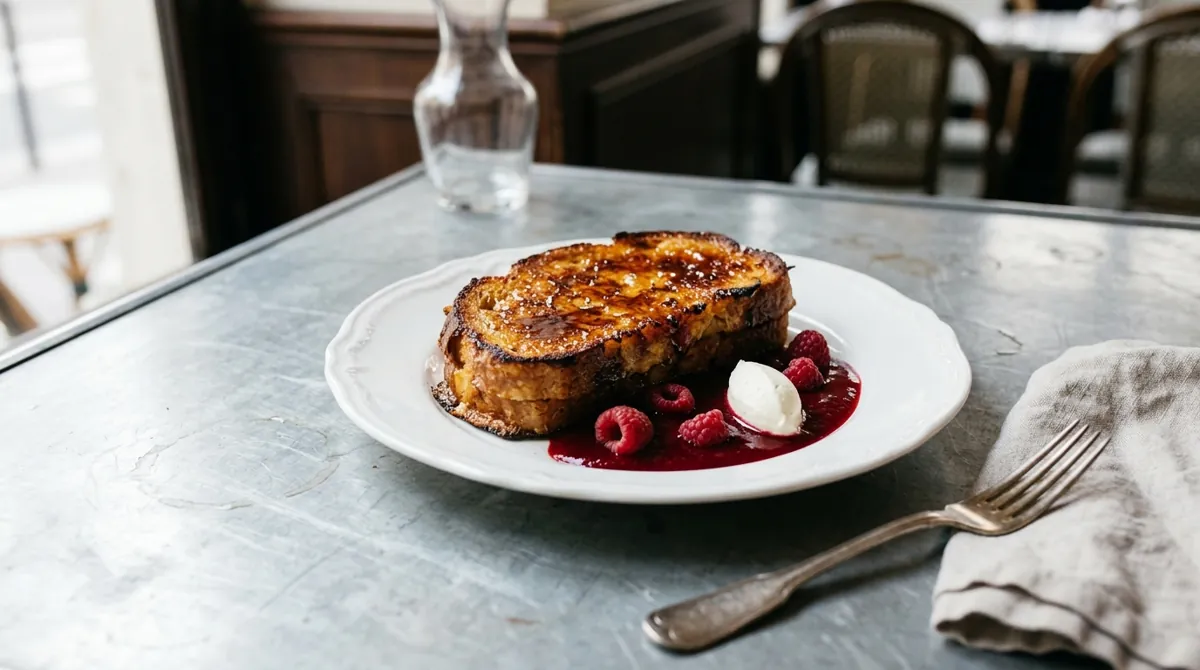
Pain Perdu (French "Lost Bread")
Thick slices of day-old brioche soaked in vanilla milk, eggs and sugar, browned in butter, then sugared and finished in a hot oven until the tops caramelize, served as a dessert the French way.
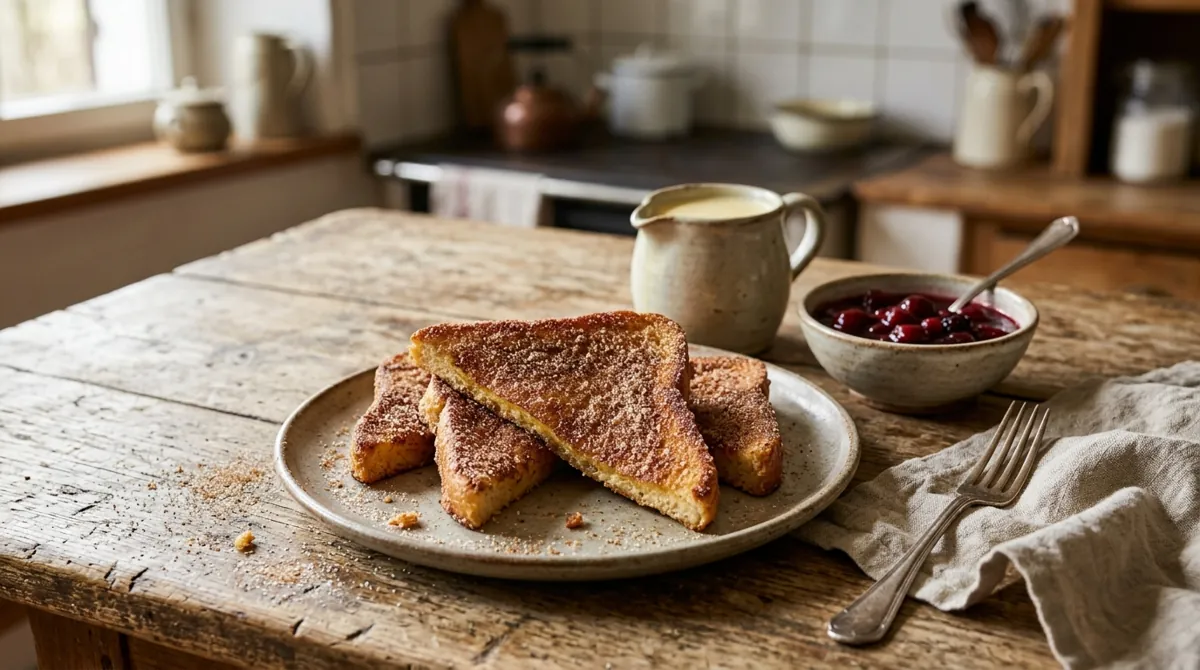
Arme Ritter (German "Poor Knights")
Day-old kaiser rolls halved, soaked in sweet egg milk, fried golden in clarified butter and rolled in cinnamon sugar, Germany's frugal French toast.
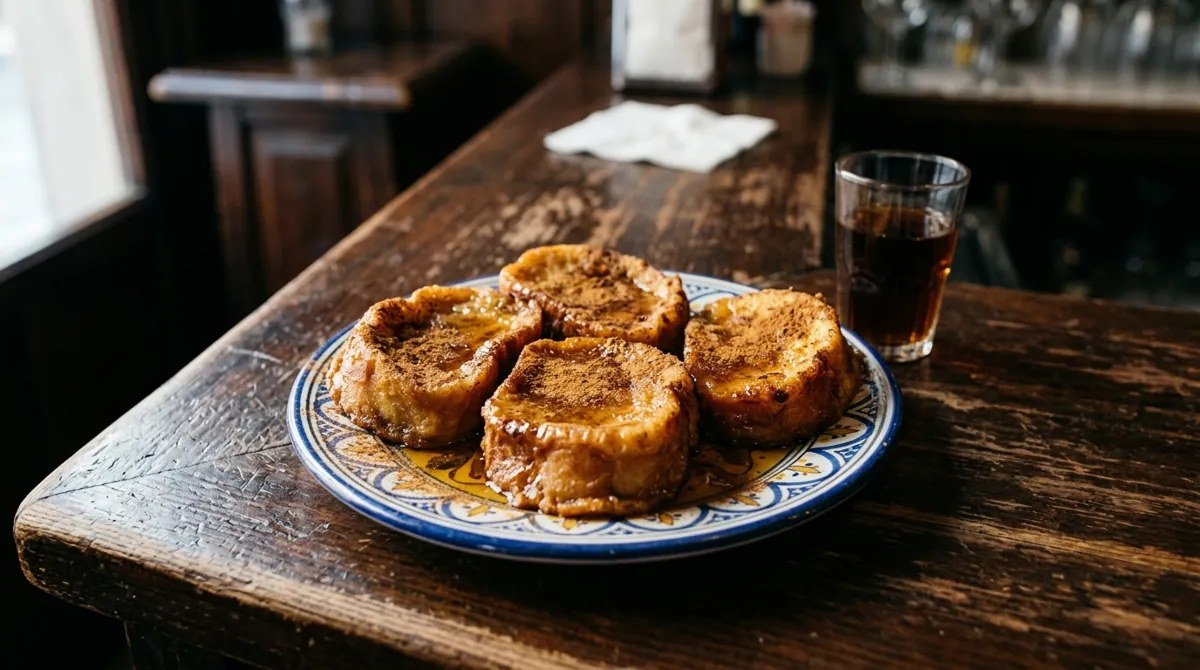
Torrijas (Madrid Holy Week French Toast)
Thick slices of day-old bread soaked in milk steeped with cinnamon and lemon peel, dipped in egg, fried in olive oil and drizzled with honey, the Lent and Holy Week sweet of Madrid.
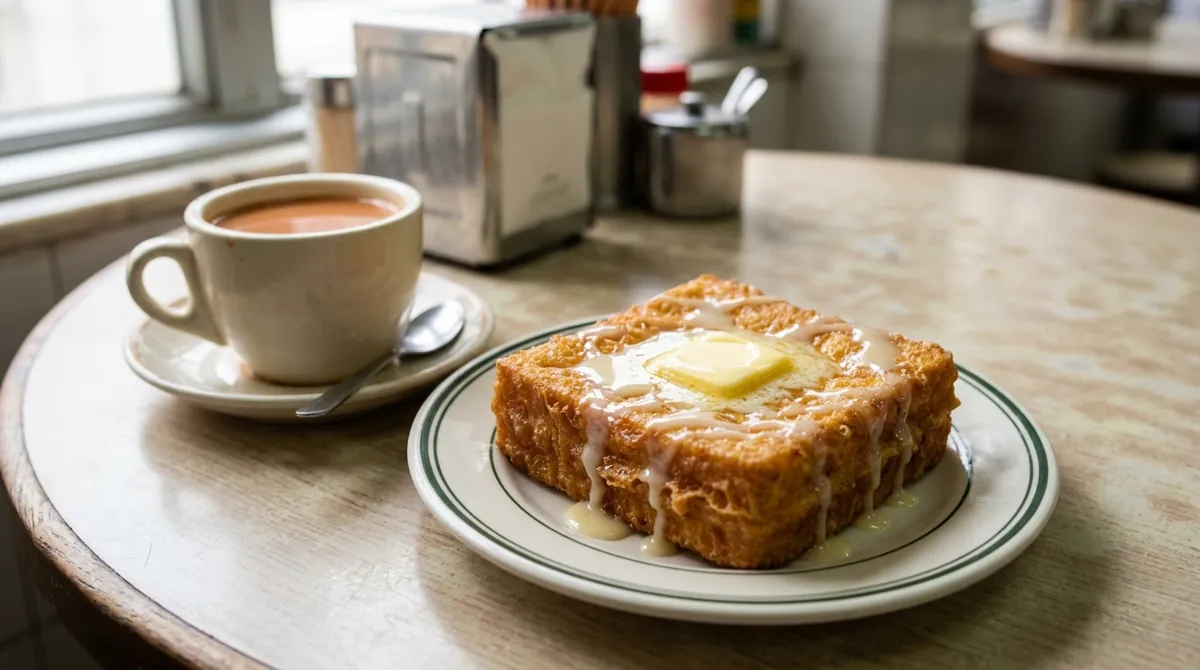
Hong Kong French Toast (Sai Do Si)
Thick white bread stuffed with peanut butter, dipped in egg and deep-fried until crunchy, then topped with a pat of butter and a drizzle of condensed milk, cha chaan teng style.
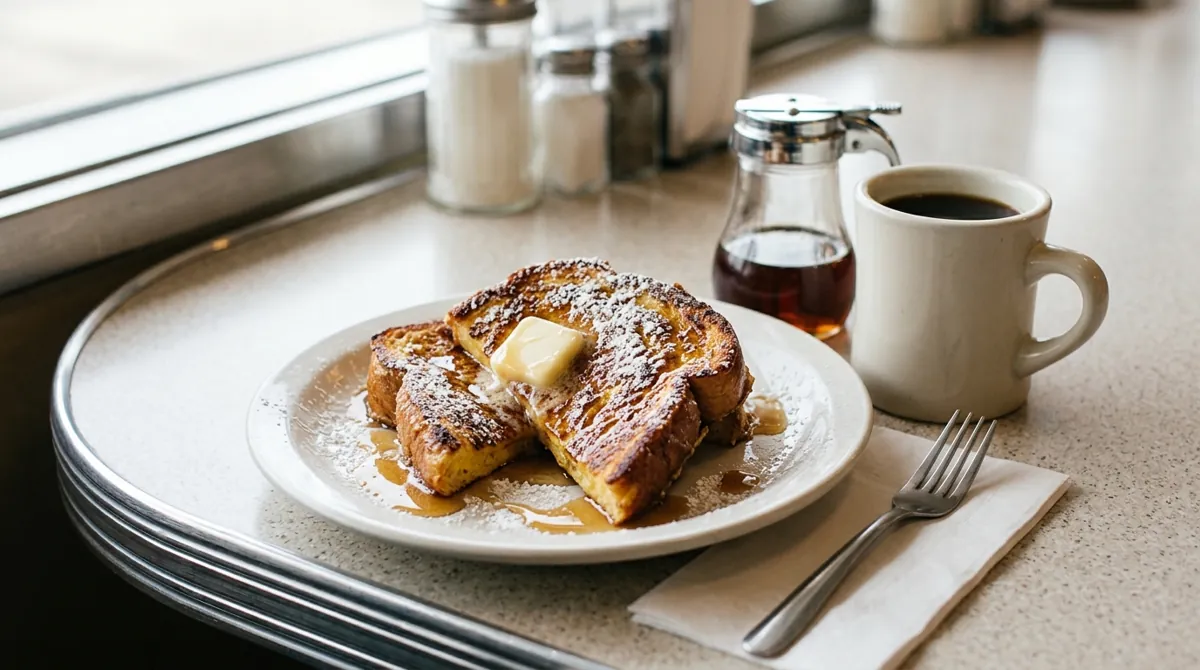
American Diner French Toast
Day-old challah dipped in a light vanilla batter with a little flour, browned in butter in a cast-iron skillet, and served the American way with butter, powdered sugar and maple syrup.
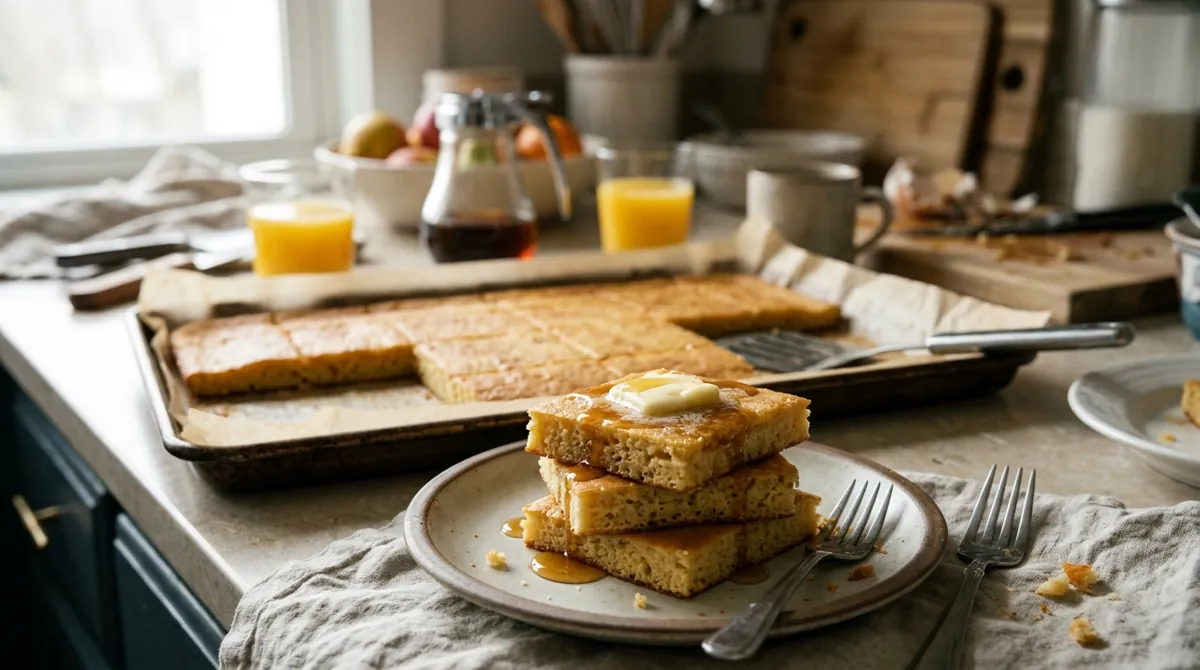
Sheet-Pan Pancakes
One big buttermilk-style pancake batter spread in a sheet pan and baked at 375°F for about 20 minutes, then cut into squares so everyone eats hot pancakes at the same time.
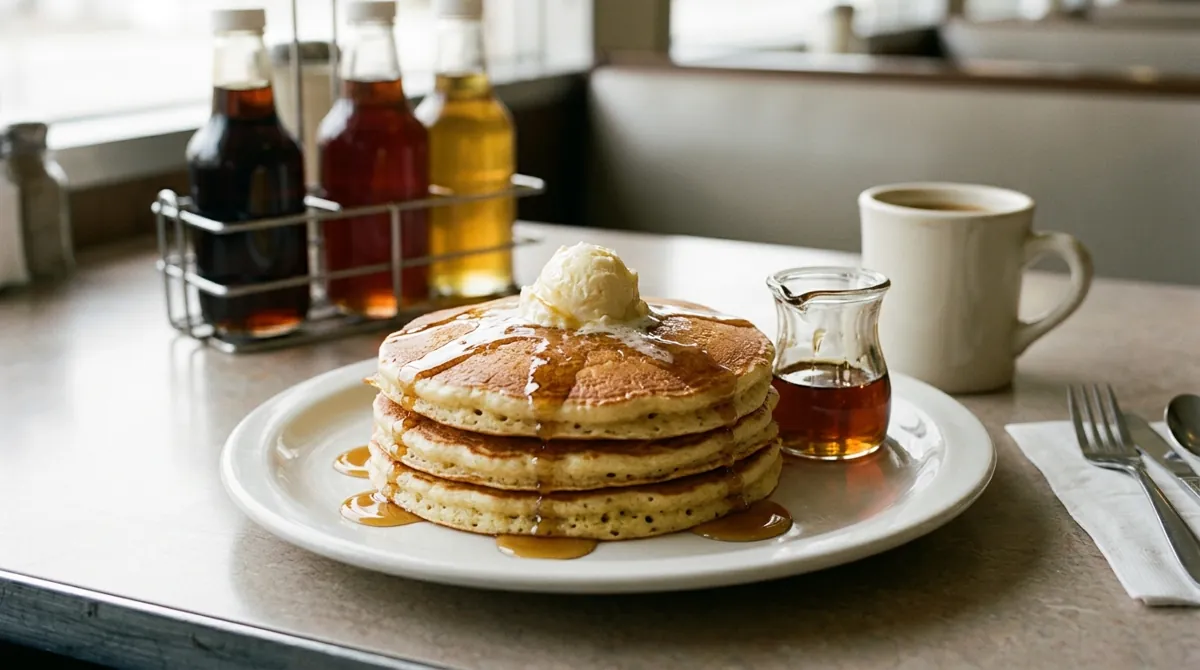
Diner-Style Buttermilk Pancakes, Inspired by IHOP
A blender batter of buttermilk, oil and a little sugar, raised with baking soda alone, griddled into tender 5-inch pancakes in the style of the all-day pancake house. Inspired by, not official.
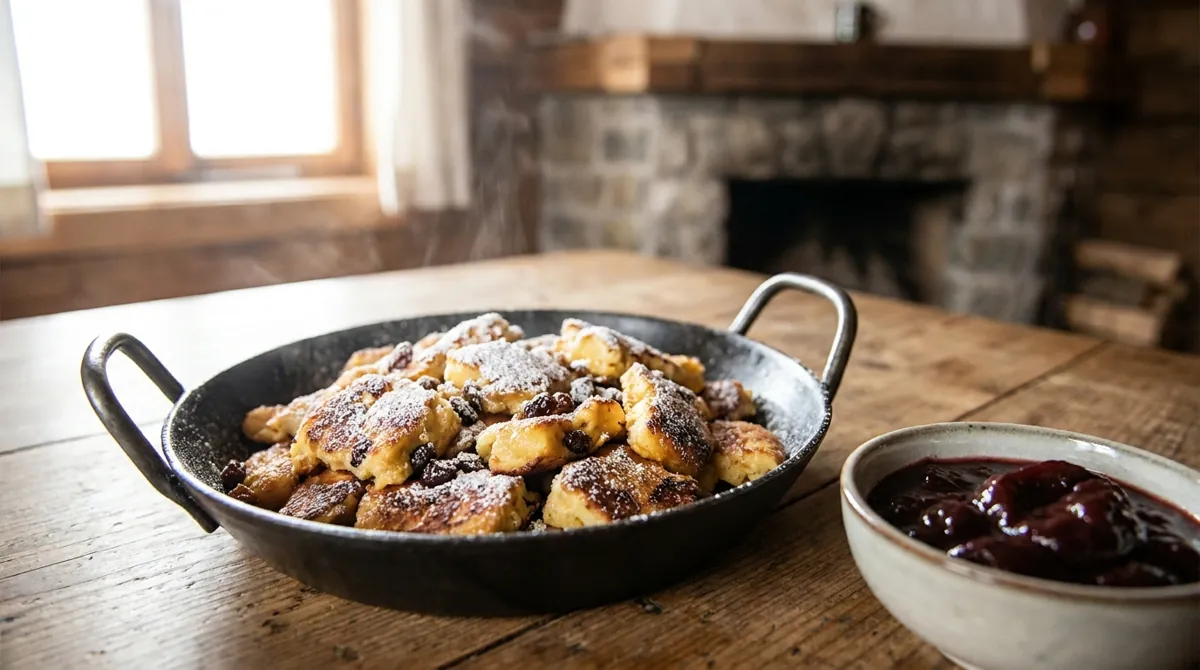
Kaiserschmarrn (Austrian Torn Pancake)
A thick, fluffy pancake lifted with whipped egg whites and rum-soaked raisins, browned in butter, finished in the oven, then torn apart with two forks, caramelized with sugar and served with plum compote.
Meatballs of the World

Italian-American Meatballs
Big, tender meatballs braised for an hour in red sauce over spaghetti. The one most Americans grew up with.

Pallottine (Abruzzo Meatballs)
Tiny meatballs, smaller than a marble, tossed right through square spaghetti alla chitarra. No bread at all.

Swedish Meatballs (Köttbullar)
Small, soft meatballs browned in butter, in a cream sauce made from the same pan, with lingonberry jam on the plate.

Danish Frikadeller
Pork meatballs shaped with a spoon and fried slowly in butter, crusty outside and soft in the middle.

Königsberger Klopse
German meatballs that are never fried: poached, then served in a creamy white sauce with capers.

Spanish Albóndigas in Almond Saffron Sauce
The tapas bar classic: small meatballs in a golden sauce thickened with fried almonds and bread.

Mexican Albóndigas with Chipotle and Mint
Soft meatballs with rice and fresh mint inside, simmered in a smoky tomato and chipotle broth.

Izgara Köfte (Turkish Grilled Meatballs)
Small, flat meatballs kneaded hard, rested cold, and charred on a hot grill pan.

Lion's Head Meatballs
Big, soft pork meatballs, stirred into a sticky paste, fried to set, then braised in a savory sauce.

Chicken Tsukune
Japan's chicken meatball: kneaded sticky, grilled on skewers, glazed with sweet soy tare, dipped in egg yolk.